Image by Tony Minguillon from Pixabay
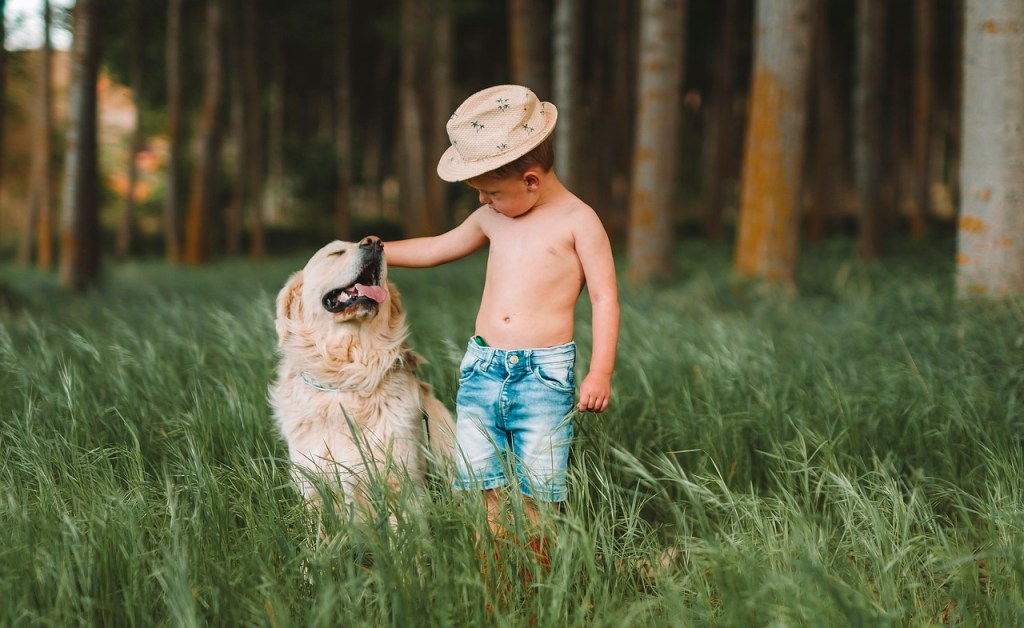
I wasn’t on board with this at first. My wife insisted and all the while I was thinking ‘ we are getting a large animal for our 4 year old that he’s not going to care about and I’m going to have to take care of it. I was wrong on several levels. I think the choice to get a dog has been an emotional and social advantage that our child would have otherwise been lacking. Our child, Elliot, has a natural empathy and confidence toward other critters that I don’t see with a lot of other children. He has a physical presence and aura of authority that I believe is also related to his canine sibling. I think this relationship between child and pet is underrated and deserves a closer look.
I wasn’t very close to our dog growing up. We had a large black Lab who stayed outside and did not interact much with the family other than feeding time or trips to the lake. My father believed that animals belonged outside, and not having many other authorities on that subject in my life, I adopted a similar attitude. I never understood just how social dogs are, and looking back on my childhood I think that our dog lived a fairly sad and lonely life. As an adult I began to realize that dogs required a lot of interaction to be truly happy and I never got one for myself because there was always a ton on my plate and I didn’t believe I had the time or space to be a good dog owner.
I had a tenant later in life who was a co-worker and eventually a good friend of mine. He purchased a German shorthaired pointer to have as a pet, which cemented all my beliefs about why I should not have a dog. That dog was hyper, needy, loud and destructive. I could take that dog for a 5 mile bike ride while he ran alongside. We would get home and he would rest for 30 minutes and be ready to go again. I understood later that it was a poor choice of dog for the size of our condo, lack of a yard, and proximity to neighbors. Looking back, I see that he was an amazing dog in a poor environment, and I remember him more as loyal, intelligent, goofy and lovable.
My wife always had a different attitude toward pets than me. I looked at animals for their practical traits, whether they were for food or protection. Dogs and cats always seemed to get along with me but I never became too attached. I guess the exception would be a couple of the cats I had as a young child. My wife looks at pets as a responsibility, almost like having another child that needs not only sustenance, but love, affection and happiness. She had a Chihuahua when we first met. A tiny dog she allegedly stole from her ex-husband because he treated the dog poorly. The dog was fidgety, noisy, spoiled and yet still riddled with anxiety. It was the complete opposite of a practical pet, although I guess he made a good door alarm. My wife slept with him in her bed every night. To say that it took some getting used to is an understatement. I eventually got it. The grumpy little guy was affectionate, cuddly and had that wide eyed puppy look down pat. You really couldn’t help but appreciate the fact that you were finally good enough for him to let you pet him, and oh the look of jealousy I got from my wife when after a few months he would curl up on my lap instead of hers.
Bodi, the Chihuahua, died when my son was 3 years old. I was distraught cried like a baby, but I also thought, finally no more cleaning up pee and poop. My wife had other ideas though. She is a scientist and a researcher and she decided that the best dog for our little boy would be a standard poodle. She had several reasons for this from how they are with children to how they allegedly won’t trigger allergies. I knew once she decided on this, it was going to happen, so I grumbled a little bit passive aggressively, then I did what any good husband does, and got out of her way.
A little side note here. We originally wanted to have more than one child with the idea that siblings would be a good experience for any kid to have. We were older parents and so our boy is an IVF (In vitro fertilization) baby. Yes, that means he was conceived in a petri dish. We had intended for him to have brothers and sisters but the process is long and hard (especially on the female half of the team). We had already had one failure before our son and he was also supposed to have a twin sister which did not work out. We tried two more times, the second time failed so spectacularly my wife almost died. It involved an ectopic pregnancy, and burst fallopian tubes. The ambulance brought my wife to the hospital after she collapsed in the living room. Even though they knew she was 8 weeks pregnant, they still blew her off for hours at the hospital thinking she was just having indigestion or something. The nurse asked her to stand up and she passed out onto the floor. That’s when they finally figured out that she was bleeding to death internally. After a messy surgery, a week in the hospital and a trauma she still hasn’t quite recovered from, she decided our son would have to do without siblings. The next best option would be Riker
We named the poodle Riker because my wife was a closet Star Trek the Next Generation fan in high school and Riker would be our son’s number one. Riker immediately reminded me of that German shorthaired pointer because he was energetic, needy and loud. Things became better as we figured him out a bit more. Riker is energetic but does not have endurance like the pointer. He is loud but he eventually (somewhat) learned when it was appropriate to bark. His neediness is endearing and apparently most dogs are genetically bred with that trait in mind, so what can you do?
The first couple years were a love-hate, almost brotherly relationship for the dog and his boy. Riker was like the bully older brother, even though he was younger he still outweighed the kiddo by about 20 pounds. He would accidentally bowl the boy over or hip check him into the couch or chew his toys to pieces. Riker destroyed a couple of stuffed animals which incurred such an episode of screaming wrath from my son that the dog learned after the second such encounter, to stay away from the stufties. We’ve had the dog now for 5 years and it has been almost 4 since he has so much as licked a stuffed animal.
So what has my son learned from having a dog? I suppose I can’t definitively prove anything, but I can describe what I have noticed in comparison with other children his age. Elliot seems to have a lot more patience and empathy with other children who have communication issues such as foreign languages or mental handicaps. He is also more tolerant in general of people who are different physically or socially challenged, and even seems to gravitate toward them. I can relate some of this to the way Elliot looks at Riker kind of like another human being. He was frustrated as a younger child because he didn’t understand why Riker wouldn’t listen to him and do what he was told. I had to explain to him how dogs don’t understand English and really only understood a few words. Elliot learned quickly how much more responsive Riker was when spoken to in a calm but firm voice while holding a snack in hand. It was somewhat humorous watching the boy use similar techniques on his little human friends with similar results.
Elliot is not afraid of other animals. He approaches all other animals with the assumption that they want petting and treats. He knows not to approach strange dogs, especially if they are leashed, without asking the owner first. Riker is very protective when being walked on a leash and Elliot takes it as a given that other dogs may be the same way, so he is careful and cautious, but not fearful. He’s ok with being jostled or knocked over by larger dogs and accepts it as part of playing, but he’s not afraid to stand up to them loudly and decisively when they go too far. Apparently he did the same with some bullies at school in such a way that everyone within a hundred feet heard the dressing down. After being treated like ‘bad dogs’ and laughed at by half the school, they don’t seem to bother Elliot anymore.
I notice that my son has an affection for other animals as well. He is not the type of boy who will casually kill frogs or even insects. He loves petting zoos and the last one we went to was at the Skowhegan Fair in Maine. He spent almost two hours in a pen with ducks, geese, rabbits, goats, sheep and chickens. After a while he became the ‘expert’ and was helpfully instructing the other kids about the animals, including which ones liked petting, which treats they liked and their general personality. After a thorough hand washing all he wanted to talk about the rest of the day was farm animals. He wasn’t even interested in the rides, he spent another hour just walking through the farm exhibits and asking questions. We had to explain several times that no, we would not be purchasing any rabbits or chickens and taking them back to California.
I know his personality is not all about the dog, but I do believe Riker has had a positive impact on his emotional development. I think that being an only child would be much more of a struggle without his furry buddy. There are certainly some natural genetic traits involved and surely parenting plays a role as well, but true empathy requires more thought and experience. I think the quality of school is also important for emotional development and I may write a post on that subject in the future. Watching him go from follower to leader over the past 4 years has been a treat and has changed my perspective on a lot of things. I think his confidence would have suffered greatly without his trusty and faithful, four legged friend.
 The Upgrade Blog