First Anniversary

Image by Myriams-Fotos from Pixabay

So today marks the one year anniversary for this blog. It is also exactly 2 years until I am eligible for retirement. I had some grand ideas and goals for this blog and to say the results are lackluster would be an understatement. I have 15 posts, about 24,000 words total and 21 subscribers. Those numbers are something I would like to achieve monthly this year. 

I’m pretty sure all of my subscribers are marketers of some kind and I’m not sure how to take that. I do wonder if any of them get anything from my posts or if they are all just hoping I buy something from them. I suppose I should be happy people are looking at all, but I was hoping for a little more engagement. The one comment I have is from one of my best friends and he didn’t even subscribe. In reality, I know it’s hard to build audience engagement when my topics are so scattered. 

I’m still not sure what to focus on. The obvious choice would be something money related since that particular post was by far the most popular. Is that really what I want to do though? Do I want to be just another wannabe financial guru that is really just an affiliate marketer reposting the get rich wisdom of the ages? There is a lot of material to pull from there, and I should know I’ve read dozens of those books. The basic premise all boils down to the same few things though. I can summarize hundreds of hours of reading into a few short words: discipline, perseverance, luck…

Yeah, that’s about the size of it. The Secret? Believe in yourself. The entire point of Think and Grow Rich: Be passionately disciplined and driven. There is a reason why your OCD friend is richer than you. I know there is objectively more to these books, but you can only read so many inspirational stories before they all start to sound the same. Much like marketing websites. After you get drawn in a few dozen times by the flashy headlines and pictures, they all just seem to blend together in a nauseating stream of ads and clickbait. 

I would really like to write a web serial, but am I passionate and disciplined enough to pump out content on a regular basis? I used to do a lot of story creation as a dungeon master for tabletop games. I used to revel in the creative process. After a while the need to come up with new and engaging creative content for my group of five players every Friday became more like work. I burned out and stopped playing for a long time, and when I tried again years later, the passion was gone. I was going through the motions enjoying the social aspect a bit, but almost dreading the game preparation. The press of life as an adult does not seem to lend itself readily to creative insight. Now that my friends and family are so scattered it’s hard to justify the effort to put a tabletop game together when Elder Scrolls is just right there!

On the subject of what I plan to do in two years, I’m still largely undecided. I’m kind of hoping some awesome opportunity is going to land in my lap and make all my decisions for me. Staying in my current job is certainly an option, and looking more likely since I just bought a new car. Stay tuned for a possible upcoming blog post on car buying. Don’t get me wrong if the right opportunity to work from home appeared, I would sell that car in a heartbeat and share a lease with my wife to make the transition more affordable. 

The idea of starting my own small business is sounding more appealing. I still like the idea of an online business but I lack the confidence in my ideas to invest a ton of money into it. I’m considering something where there is a definite need in my area, like house cleaning, or daycare, or pet sitting. I don’t necessarily enjoy any of these things but I like the idea of running a business and trying to get it to the point where I can step away and let my employees take over.

In the end, while the subject of retirement and a second career looms on the horizon, I’m not terribly worried about it. I usually make the best of every situation that comes about. I might procrastinate or get sucked into video games but when the time comes I will step up and do what needs to be done. Sometimes my confidence wavers and part of me thinks I might be getting too old and lazy for something new. Deep down, however, I know I’m still that guy who will power my way through any obstacle. I’m still that kid who worked on a farm for 3 dollars an hour to buy comic books. I’m that kid who biked 85 miles with everything I owned on my back because someone told me I couldn’t. I’m still that guy who renovated an entire house by myself in two weeks. I’m still that guy who hiked Mount Whitney at 44. Don’t give up on me yet.

My Keto Experience

Image by Sarah Kallend from Pixabay

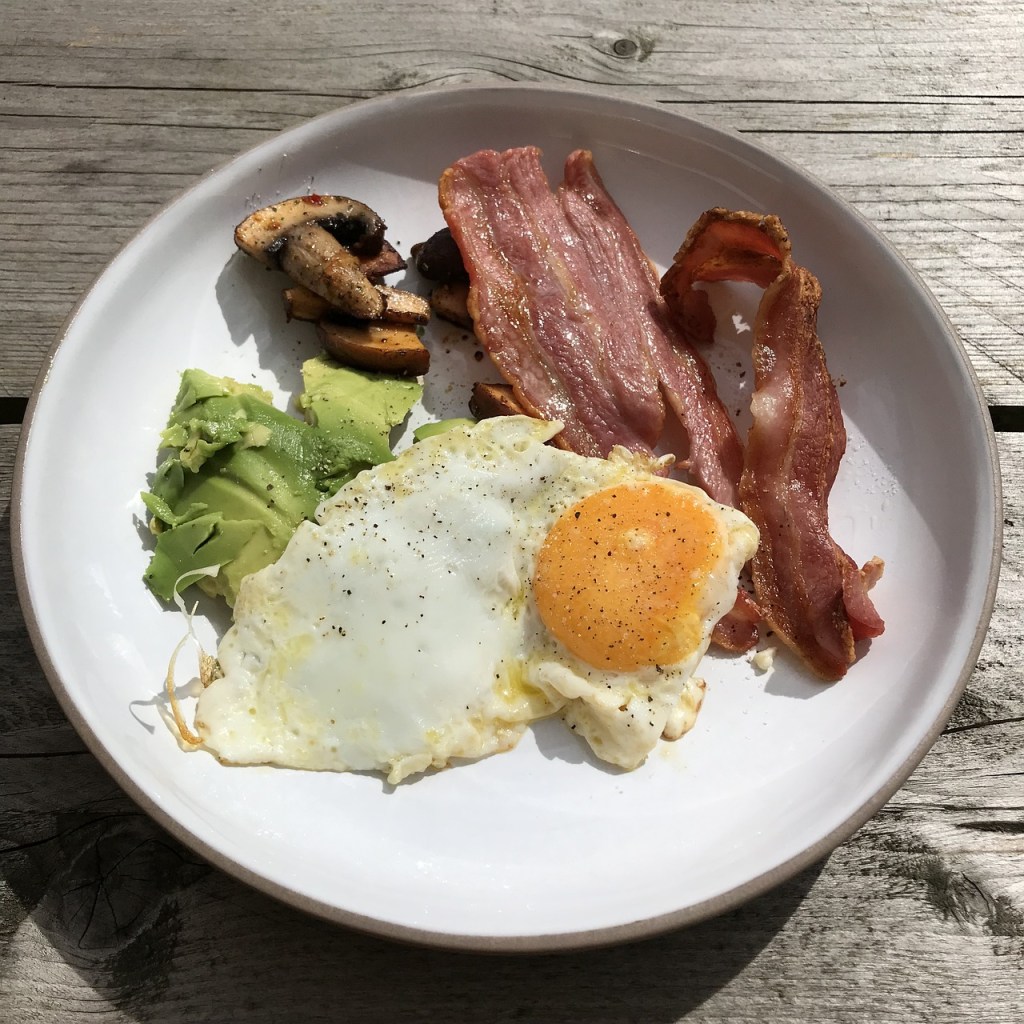
I’ve talked about this a little in some previous posts, but never really got into any detail. The keto diet is a low-carbohydrate, high-fat diet designed to shift your metabolism from relying on glucose (carbohydrates) for energy to relying on ketones (fat). This metabolic state is called ketosis. By significantly reducing carbohydrate intake (less than 30 grams a day for me) and increasing fat consumption, the body is forced to use fat as its primary energy source.

For me, the most difficult issue with this diet was the company I kept. Having family and friends around deviously offering high carb foods and sugary treats was an ongoing distraction. My nemesis, beer, was another big hurdle. I’m sure a lot of people with stressful jobs get this, but at the end of the work day there is this willpower vacuum. Your adrenaline is calming down as you leave work just so you can endure an hour-long drive through traffic to get home and deflate. Nothing sounds better than a burger, some fries and an ice cold beer. Nope, not on keto. You can have a burger with no bun, some cheese, low sugar veggies, and a glass of water.

As a result of temptation, over the course of five months I slipped in and out of ketosis several times and that back and forth kind of sucks. Keto is definitely something you should be prepared to maintain for the long haul. I didn’t measure ketones with special equipment or strips or anything because I never felt that serious about the experiment and it was pretty obvious to me when my metabolic shift occurred. The first time getting into keto consisted of about a week of sluggishness where I felt like I could not sleep enough and a pretty gnarly headache for about 3 of those days. I’ve always struggled with some bad breath issues so I did not notice that symptom in particular and my wife is pretty good at letting me know if it’s a problem. I generally brush and use mouthwash 2 or 3 times a day and use Altoids between meals. Can’t do Altoids on keto, or at least you need to be careful not to do too many.

After about a week my mind became noticeably more clear and my short term energy became more easily accessible. By easily accessible I mean that the period from rest to motion grew shorter. For example getting up off the couch became easier and I didn’t have to stumble around for a few minutes before it felt like my muscles and mind were up to speed. I felt less desire for caffeine. In fact, over the course of 3 weeks I went from a pot a day to zero coffee. It was a weird feeling being at work without a coffee cup. 

The first time I slipped out of keto was only 3 weeks in, but the effect was like being drugged. After a hard day of work, weakness overtook my senses and I decided to relax with a hazy IPA. I barely made it through half the beer when fog seemed to come over my mind and my muscles seemed to become too relaxed. I remember my vision was affected to the point where I couldn’t read words on the tv screen even with my glasses on. When I got up to walk it took effort and my balance was off for about 20 minutes while I experienced an intermittent kind of vertigo. I think it took me about 3 days to get back into keto after that. The fatigue transition was milder and the headache was very minor. Basically, the day after that one beer I felt like I had a very mild hangover. 

The weight loss or the way it worked rather, was quite surprising. Over those first 3 weeks I lost ten pounds, but then I stopped losing weight for a week after that one beer. I figured that those first few pounds were mostly water weight anyway, and I didn’t worry too much. The surprise was that it stopped so completely even though my diet didn’t really change, I think it took almost 2 weeks to drop another pound. 

Another cool effect of keto was the appetite suppression. With the right meal I could eat around 11am, eat another small meal around 6 or 7pm and be satisfied until 11am the next day. This was quite novel for me, because when I’m not on keto I tend to graze with 5 or 6 small meals and snacks throughout the day.

Depending on what you decide to eat on your keto diet it can be a little more expensive and a lot more work than normal meals. For some people the food cost alone could be prohibitive. I’m used to California prices which for a lot of the basics is a little more than triple what my brother pays for the same thing in Maine. I tried a bunch of different things but the one I liked the best was the steak and salad meal plan.  I would buy a large pack of ribeye steaks, preferably  from Costco when they are on sale for $13.99 a pound, and prepare a huge salad to go with them. I went with simplicity for the steaks, seasoning them with olive oil, salt, pepper and garlic powder. The thin ones I would cook in the oven on 350 for about 15 minutes and the thicker ones for maybe 25 minutes. The salad was a bit more work and the ingredients would vary depending on what I had on hand. A typical salad would have lettuce and or spinach, arugula, hard boiled eggs, bacon, cucumbers, almond slivers, pine nuts, walnuts, black and green olives, avocado, and whatever varieties of cheese I had on hand. I used whatever type of salad dressing I wanted or was available, usually some organic variety sold in the refrigerated section. Eating the above meal exclusively I could sit on my butt playing video games eating as much as I wanted and consistently lose 1.5 pounds a week. Sounds easy and amazing right? Well believe it or not steak can actually get boring and making a fresh salad every day with umpteen ingredients is labor intensive. 

Over the next few months I cheated a few times with the transitions in and out of ketosis much less noticeable. I think the longest I stuck to the diet was about six weeks straight. The results after about 5 months was a loss of 22 pounds. I should mention that for about 3 weeks of this stretch I was on vacation and cheated quite a bit but did not gain or lose any weight. I was also very inactive for most of this time mostly because my endurance seemed to be affected. I would try to push up a hill during moderate hike and it was more of a struggle than it should have been. I’m guessing this was a result of a lack of carbs because when I left keto for the holidays my endurance returned just fine.

I stopped keto right before Thanksgiving because I did not feel like restricting myself with all that yummy food available. The transition was pretty smooth and I actually felt pretty good for about 2 weeks, then the weight came back with a vengeance. I was doing longer walks and not eating too terribly but over the course of six weeks I gained back 10 pounds. After the holidays the weight gain slowed a bit but now a year later I’m not quite back where I started, but only a couple of lazy weeks away. To give you an idea of the numbers, I am 5’11 and was 210 pounds when I started the diet and 188 when I consciously quit. I tend to fluctuate a lot with water weight so I weigh myself every morning when I get up for consistency. This morning I was sitting at 202 which is about my average for the last 5 years. 22 pounds does not seem like a lot when I consider that I once lost 11 pounds in one day hiking to the top of mount Whitney and back. It seems pretty good when I consider how much I cheated on the diet and how inactive I was.

Before I wrap up I have some other observations to share regarding what triggered a falling out so to speak versus what did not. Liquid carbs seem to thwart keto faster than solids, and processed, especially baked types of foods cancel keto faster than whole foods. For example, a heavy beer, ice cream or a slice of cake and for me that was pretty much back to square one. Although it seemed quicker to get back in the ketosis state as far as energy and mental benefits each time, the metabolic benefit would basically halt for at least a week. I would have some fruit now and then in my salads, such as dried cranberries, dried blueberries and tomatoes, with no discernible effect. I had small servings of potatoes or hash browns with no ill effect. I never tried eating a whole banana which would probably cross the line. I feel like the diet was more tolerant the longer I sustained it. At one point I had two 12-ounce Miller Lite’s in an hour and did not have an issue. 

I believe the amount of carbs you can have is dependent on your personal metabolism, the types of carbs and the time between consumption. That being said the road is much smoother if you count every carb and don’t experiment. I have heard that some people have trouble finding enough fat, which I find funny because I love cheese. I suppose if you are lactose intolerant then feeding this diet could actually be a challenge. Personally I don’t think keto is for me in the long term because I don’t like closing off so many other delicious options. Plus, I like beer. In closing, it needs mentioning that I am not a doctor or in any way related to the health profession. Nothing I say should be considered medical advice. If you are one of those fortunate people who actually has the ear of a doctor you can trust, by all means consult them before trying keto.

Exploring the Virtual Assistant

Photo by Life Of Pix

As part of my quest to find a worthwhile work from home career I have looked into becoming a virtual assistant. I understand this can be a rewarding and flexible career choice, especially if you’re looking for remote work that can vary widely in terms of tasks and industries. Here is a step by step guide to figure out if this kind of business is right for you, and how you can make it work.

A virtual assistant is a remote contractor who provides administrative, technical, or creative assistance to clients from a home office or other remote location. They handle a range of tasks that can include managing emails, scheduling appointments, handling customer inquiries, managing social media accounts, preparing reports, and more. Tasks can range in scope or be very specific depending on the client’s needs and the assistant’s expertise. They serve businesses, entrepreneurs, and professionals, offering flexibility and scalability for various operational needs without the overhead associated with full-time employees.

First identify the things that you’re good at. These can be skills you love and are willing to improve or things that you already have a good deal of experience with. Common skills required for a virtual assistant include organization, communication, time management and proficiency with technology. For the sake of time and career progression, consider focusing on a niche based on your preferred skill set. Examples include administration, social media management, content creation, bookkeeping and customer support. If you stand out within your specialty you will eventually be able to charge more for your services.

Train yourself to fill in the gaps. You may not need a college degree to be successful, but the more knowledge you have pertaining to what your clients are using, the more work you can get. If you don’t already have the knowledge, take classes in business administration, communication and computer science. There are plenty of online workshops tailored specifically for virtual assistants as well, which can teach you the basics or enhance your current skills. Websites like Udemy and LinkedIn Learning also have targeted courses for what you need. Take a look at more personal coaching programs tailored for virtual assistants as well. These small, or one on one classes may be more expensive, but they can get you up to speed quickly for a more productive head start.

Remember that you are running a business. Decide if you want to operate as a sole proprietor, an LLC, or another type of business entity. This will affect your taxes and legal responsibilities. You will need a reliable computer and any necessary software. A private workspace that allows you to work without distractions will contribute to higher productivity and professionalism. 

If you don’t already have one, build a portfolio that showcases your skills and previous work. That’s part of what I’m trying to do in writing this blog. Include testimonials if you have them. Develop a professional website and create business profiles on social media platforms to promote your services. Speaking of which, I now have a Facebook Page, take a look! Join online communities and forums where potential clients might frequent. LinkedIn, virtual assistant Facebook groups, and online business forums are great places to start.

Check out job boards such as Upwork, Freelancer, and Indeed for virtual assistant jobs. Seek out specialized VA agencies for more lucrative opportunities if you have the skills. Send tailored pitches to potential clients directly, explaining how you can solve their specific problems. Leverage your existing networks and ask for referrals. Happy clients are often willing to recommend your services.

Use contracts with your clients to clarify expectations, including what the final product should be, how much time you have to do it, and how much you will be paid. Decide how you will bill (hourly, per task, retainer) and use invoicing tools to manage payments. Stay updated with new tools and trends in your field of expertise to keep your skills relevant and marketable.

As your client base grows, consider outsourcing some tasks or hiring other VAs to work under you. Broaden your offerings as you gain more experience or as client needs evolve. If you are willing to be the boss and manage a real business, the earning potential is practically limitless. If you are really excited about certain aspects, try to focus on what you love and delegate everything else to your employees.

I know there is a lot of generalized information here. There is the potential for a separate blog post with almost every sentence, and I may just capitalize on that. If you or someone you know has gone down this path, please leave a comment and share some advice. Becoming a successful virtual assistant involves a mix of the right skills, effective marketing, and quality service delivery. With dedication and ongoing learning, I believe you can establish a sustainable and fulfilling career as a VA.

Happiness Part 2

Image by Ylanite Koppens

Going from my 20’s to my 30’s ended up being one of the most psychologically traumatic times in my life. I was nursing some pretty significant disappointments with myself and the world in general while transitioning from a stressful job as a 911 dispatcher to another stressful job as an air traffic controller, and going through a divorce at the same time. Being a dispatcher is not a job that promotes a positive outlook on life or a lot of faith in your fellow humans. Being an air traffic controller is also not easy, and training is the worst part. I’d like to say this work-related tension caused my divorce, but the truth is that it was a long time coming and my state of mind just made it happen more quickly. My epiphany was that I had spent so much time catering to other people that I had almost completely neglected what I wanted. I had lost myself and what I wanted to be and harbored a deep sadness and resentment. I needed to fix that state of mind if I wanted any real chance at inner peace. In the  hustle and bustle of our daily lives, finding true happiness can seem like a distant goal. I spent the next few years recovering, trying to figure out what went wrong, and how to prevent future unrest. I learned a few things along the way and I’d like to share them with you. I’m going to dig into how to manipulate your state of mind into something more productive, positive and overall happy. 

Negativity is a slippery slope. Once you start down that road, a path many of us were trained to follow as children, it colors everything that happens around you. I would like to suggest that you can alter your perspective through mindfulness, which is really just paying attention to how you feel and why you feel that way. Eckhart Tolle, a renowned spiritual teacher and author, emphasizes the importance of living in the present moment. In his books, “The Power of Now” and “A New Earth,” Tolle explores how embracing the present moment liberates us from the grip of negative thoughts and emotions. I found these books quite helpful in changing my emotional state for the better. I had adopted a habit of brooding about the past and ultimately wasted large amounts of time feeling sorry for myself. This was ultimately self-destructive. The idea of being in the “Now” involves being fully present in the moment, cultivating awareness,  and accepting thoughts and feelings without judgment. 

A basic example of how this works is through meditation. You have a focus while you meditate, such as your breathing, or the flame and the void, if you’re a Robert Jordan fan. As negative thoughts intrude you don’t suppress them, instead you acknowledge them and then just mentally place them outside of your focus (or into the flame) knowing that they are there but they do not affect the present moment. This draws into focus things that are affecting the present moment, and there are internal conversations that take place. This is where Tolle emphasizes the difference between your actual self and your whiny little biological self. Whiny is not his wording, I think he calls it the “pain body”. This annoying voice tells is incessant and distracting, but your true self knows what is truly important. It takes a long while to handle this noise, but trust me it eventually becomes instinctual. Once you finally overcome the past and future background static, you still have an inner self-talk that sounds like this: I have to pee, something smells bad, I’m hungry and thirsty, this floor is hard and I need a cushion, dude you can wait until I finish this 5 minute meditation! 

This may seem like it’s somewhat time intensive, it does take a while to reach the proper state, and at first it is not as easy as it sounds. Once you get some practice, however, say 2 to 3 weeks 10 to 15 minutes a day, it becomes more natural and the benefits become more apparent. You can eventually learn to center yourself quickly, which is really important in my profession. I can be on the radio talking to a dozen aircraft, feeling the panic coming on, the cold sweat, the tunnel vision, then I take a deep breath, embrace the “Now” in the moment between transmissions and immediately put myself in a better head-space. I think many people in stressful professions learn to do something like this instinctively, or they don’t last long, and the toll on their body and mind is much higher.

The idea of self-talk is something I never really considered before my low point, but I have learned to appreciate the value this tool has to offer. Anyone who is serious about self improvement is familiar with the famous book “The Power of Positive Thinking” by Dr Norman Vincent Peale, but this idea has been around since the ancient Greeks and possibly before. There are many modern versions of this “Secret” but the basics are simple enough to understand. Your thought processes are often a self-fulfilling prophecy. If you think you are destined to live in a trailer park collecting welfare checks in back woods Maine, you will likely end up there. If you deny this version of reality and decide you will live in a Southern California beach town in a million dollar condo, the new reality becomes much more likely. I consider myself to be living proof of this concept.

Positive self-talk can take many forms. You can repeat affirmations in your head over and over, write down your goals and how you will achieve them, or put a picture on your desk of a kitten looking in the mirror seeing a lion in the reflection. Doing all three of these and more will ultimately increase the effectiveness. I also find listening to positive  and inspirational music to be very effective. There is a reason why “Eye of the Tiger” is on so many workout playlists. I jokingly refer to all this stuff as self-brainwashing. In my mind that is basically what we are doing, brainwashing ourselves with the thoughts we allow most often. The fact is our brain responds to repetition and molding. If you tell yourself something consistently and repeatedly with enough conviction your subconscious will start to believe it and work behind the scenes to make it a reality. 

During my recovery years my self-talk was more affirming than goal oriented. I would say things like “I will get through this” or “I am not defined by my past mistakes”. Later, when I had recovered a bit, I got cocky and had grand affirmations like “I will be independently wealthy in 5 years.” That particular goal got derailed by reality and several other factors which I may or may not reveal in future posts. These days I am fighting the ever creeping chains of cynicism disguised as pragmatism but I still have more specific and realistic versions of goals such as “I will retire from my current job at 51 years old”, and “I will pay off my home and 2 rental properties by 60 years old.”  Accomplishing both of these are by no means a sure thing, but they are something to shoot for that will require more than me sitting on my butt and coasting through life.

Be careful of situations that can sabotage your efforts. It is difficult to maintain a positive outlook if you are surrounded by negativity. If your friends and family are unrepentant cynics you may need to distance yourself, and a long vacation may not be enough. If you work in a job like a 911 dispatcher where no one who calls you has anything good to say, you may want to consider a new career. Dedication can overcome these challenges, however, constantly being exposed to negativity will encourage backsliding. Don’t watch the news, the networks don’t make money spreading good news. I haven’t watched it for over 20 years and I don’t feel like I’ve missed out on much. I find that my co-workers will give me a summary of current events whether I want it or not anyway. If there is something interesting I can always find a less biased, less sensationalized version of it online.

The main thing I’ve learned over the years, for myself anyhow, is that happiness takes effort. Kind of like marriage or a career, things don’t tend to trend upward without some direction and a sense of purpose. There are a plethora of tools available to anyone with the will to use them. I encourage you to read, listen, talk and educate yourself. Give meditation a try, it may not be for you, but every bit helps. Keep in mind positive thinking doesn’t imply ignoring challenges or denying reality; rather, it encourages us to focus on solutions, opportunities, and the good aspects of our experiences. I will consider posting book reviews and recommendations in the future if people are interested, until then, stay motivated, stay happy.

Happiness Part One

Image by Chris F

I find myself in a bit of an unusual position as I delve into this topic. The ideas surrounding this form of self-improvement have often struck me as cheesy and uncomfortable. However, as I’ve matured over the years, my perspective has shifted, leading me to a profound realization: happiness stands as the single most overlooked aspect of my personal development journey. I admit, I’m a bit hesitant to explore the realm of self-improvement in my writing. It’s not that I lack knowledge—I’ve delved into everything from Napoleon Hill to Tim Ferris, devouring hundreds of books on the subject. However, I’m not exactly the stereotypical ‘self-help guru.’ I don’t rise at 4 am, run 10 miles, meditate for 30 minutes, and then consume a bio-hacked breakfast. I’ve attempted that lifestyle before, but it simply doesn’t align with who I am. My approach is decidedly more moderate. Having said that, I’ll begin by sharing what I consider to be the most valuable insights from my own experiences.

It’s easy to forget that the pursuit of happiness is something we have to constantly work at. If we neglect it for too long we can slide into a spiral of negativity. Sometimes the change is so subtle we don’t even realize it’s happening until our emotions surface or someone points it out to us. The desire for true happiness is a common theme for humanity, but understanding how to cultivate and sustain it remains a challenge for many, including myself. Fortunately, there are numerous practical approaches, insights, and lifestyle changes that can contribute to nurturing our well-being.

Mindfulness, in the context of self-awareness, is often associated with meditation. This can be a powerful tool that can bring real benefits to our daily lives. I honestly think that learning this practice can bring relief from a host of psychological disorders. By practicing mindfulness, you can obtain a heightened awareness of the present moment, enabling you to better manage stress, anxiety, and negative thoughts. Exercises like focused breathing or mindful walking can gradually train the mind to stay present, fostering a sense of calm and contentment. It took me a while to take mindfulness seriously. I was in my 30’s when I read “The Power of Now” by Eckhart Tolle and it was a serious game changer. Granted I have to take a lot of what he says with a grain of salt, but the techniques and the ideas work. You should also understand that this is not as easy as it sounds. It takes time, discipline and repetition.

Cultivating gratitude is another somewhat surprising path to happiness. Taking time each day to acknowledge and appreciate the positive aspects of our lives can have a similar effect on our mental well-being. We can do this through interactions with friends and family or as part of our daily meditation by reflecting on what we are grateful for. This practice helps us appreciate what we already have. This one is still really hard for me. I think clawing my way up from the bottom has jaded my sense of what being grateful means. Like so many other things though, this is something I’m working on because I can see the value in it.

Human beings are generally social creatures, and meaningful relationships play a crucial role in our happiness. Spending quality time with friends and family, or contributing to our community can increase our happiness by improving our feeling of  belonging. As an introvert I have some difficulty with making and keeping friends, so I have relatively few really good friends. I still find joy in the creation and participation in large gatherings of familiar people. There is something about surrounding myself with positive interactions that creates a feeling of peace and satisfaction. I usually do this by feeding people. I invite them over for a barbecue, and watch them mingle and create new connections. I also recommend Meetup groups if you are single and have free time.

Another way to stay happy is by keeping engaged in challenging and inspiring activities. For me hiking is a big part of this. There is something about spending all day in the wilderness, the freedom, the independence, that keeps me mellow. The sense of accomplishment and boost to self esteem doesn’t hurt either. My other common go-to activity is video games. There is something about immersion in a sprawling fantasy world that triggers my sense of wonder and creativity. 

I believe physical health and mental well-being are thoroughly linked. Exercise, diet and sleep all combine to affect our mood and mental resilience. Engaging in physical activity releases “feel-good” hormones, and a healthy diet and proper rest contribute to a more balanced and energized state of mind. It’s been my experience that you don’t have to be a crazy work out nut to gain some substantial positive effects. A short 20-minute walk outside is enough to settle my thoughts in most cases. Controlling your diet can be tough, it takes time and money to eat well in most cases and it’s easy to cut corners and eat poor quality food. Sleep can also be challenging for some people. I used to be a terrible insomniac, only sleeping 4 or 5 hours a night. There are so many issues that contribute to poor sleeping, it’s hard to narrow down what one particular person’s issues are, and not every cure works the same for everybody. My issues were mainly a combination of future anxiety and back problems. It eventually took a combination of meditation, melatonin, a chiropractor and a tempurpedic mattress to get me mostly sorted out.

Success in happiness is a combination of a variety of factors. These factors are different for everybody. The first step is understanding that there are tried and true changes that can affect your well-being in a positive manner. By incorporating these elements into our daily lives, we can incrementally improve day by day. Learn to not look at happiness as something transient like a drug induced-high. It is a state of mind and being that can be cultivated and sustained. Start small, be patient and stick with a plan. The journey may be difficult at first, but it gets easier and I guarantee it’s worth it.