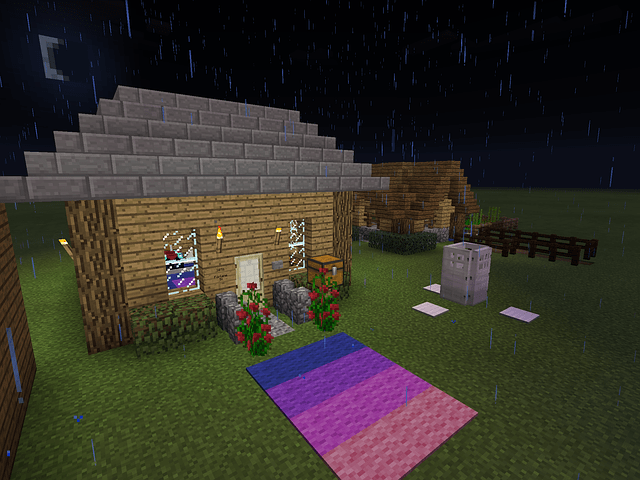
Minecraft, the Addiction is Real

Image by SkyeWeste

Minecraft is the first game my son and I completed together. By completed I mean defeating the ender dragon in survival mode and seeing the credits scroll by. We had been playing for a while, dodging the endermen and waging a sort of primitive trench warfare against the dragon when my son said “Dad, if we just put on pumpkin heads the endermen will ignore us.” We put on our new carved helmets and the rest is history. He was five, and I was so proud as we watched the credits scrolling by, reminding me of the first time I beat Mario Brothers so long ago. Since then my Mom and one of my brothers have also started playing, joined occasionally by my wife. 

If you have gone this far with the game, you appreciate the time and effort involved, and you also probably won’t need to read the rest of this post. If you have not, you may well be missing out on the cross generational, cross dimensional, geologically magical adventure that is Minecraft.

Minecraft, since its official release in 2011, has captivated millions of players worldwide, becoming one of the best-selling video games of all time. Its simplistic graphics and seemingly straightforward gameplay might not initially suggest a recipe for addiction, yet it has a magnetic hold on its audience. So, what is it about Minecraft that makes it so addictive? I’ve tried to explain this to friends and family for years but it’s hard to articulate its nature properly, especially to adult gamers who look at minecraft as ‘just a kid’s game’.

Minecraft’s most compelling feature is its sandbox nature, which allows players to build and explore without predefined objectives. This open-ended creativity is a significant draw. Like life, exploring minecraft is quite like an infinite box of chocolates. In Minecraft, players are limited only by their imagination. Want to build a replica of the Eiffel Tower? Go ahead. Feel like constructing an underwater city? No problem. This freedom to create and modify the game world offers endless possibilities and keeps players coming back for more. 

I’ve had fellow gamers scoff and tell me that I should just play Ark, as if better graphics makes a better game. Although I do love taming armies of dinosaurs, you can’t really dig in Ark, it is not a true sandbox in my opinion. At some point I may need to make a separate blog post on what constitutes an actual sandbox. Some people think a true sandbox is basically a game development engine, but the game should have some set qualities otherwise very few people will invest the time to learn all the tools. Other people seem to think any game with an open world and questionable or non-existent storyline is a sandbox game. Yet none of the better graphics games seem to come close to the scope and versatility that is Minecraft. I would say that 7 Days to Die is the closest thing I’ve seen to an actual sandbox game with decent graphics. Please feel free to comment with your opinions.

Unlike many other games, Minecraft starts you off with a blank canvas. The absence of a rigid storyline allows players to forge their path, setting and achieving personal goals. This creative freedom is akin to playing with digital Lego blocks but on a much grander scale. The satisfaction derived from seeing a project come to life, block by block, is immensely rewarding and addictive. I should mention that Lego Fortnite is coming along nicely but still has a way to go to compete with Minecraft. ‘A’ for effort Epic!

Minecraft offers vast, procedurally generated worlds filled with diverse biomes, hidden treasures, and mysterious caves. The sense of discovery and adventure is a powerful motivator. Every new world is unique, providing fresh landscapes to explore and secrets to uncover. The game’s procedural generation ensures that no two worlds are the same. This randomness fuels  curiosity and encourages players to venture into the unknown. The excitement of what lies beyond the next hill or within a dark cave keeps players engaged and eager to explore further.

The survival mode in Minecraft introduces elements of danger and resource management. Players must gather resources, build shelters, and fend off hostile mobs like zombies and creepers. This survival aspect adds a layer of challenge and urgency that can be thrilling and addictive. Managing resources effectively is critical to survival. Players must mine for materials, hunt for food, and craft tools. The satisfaction of progressing from basic wooden tools to diamond-encrusted armor provides a strong sense of accomplishment and growth. Battling mobs and planning defenses adds a strategic element to the game. The adrenaline rush of surviving a night filled with zombie attacks or successfully navigating a perilous cave system enhances the game’s addictive nature.

Minecraft’s multiplayer mode allows players to join servers, collaborate on massive projects, or compete in mini-games. The social aspect of Minecraft fosters a sense of community and camaraderie.Working with friends or other players on large-scale projects can be incredibly fulfilling. The collaborative effort of building cities, amusement parks, or intricate redstone contraptions strengthens bonds and enhances the gaming experience. Minecraft has a vibrant online community with countless servers catering to different play styles, from creative building servers to competitive PvP (player vs. player) arenas. The ability to join and contribute to these communities adds another layer of engagement and addiction.

Minecraft’s educational potential is another factor contributing to its addictive nature. Many schools and educators use Minecraft as a tool for teaching various subjects, from math and science to history and art.The game encourages problem-solving and critical thinking. Players must figure out how to gather resources, build structures, and survive in a challenging environment. These problem-solving aspects are not only educational but also highly engaging. Minecraft promotes creativity and innovation, essential skills in today’s world. The game’s redstone mechanics, for instance, allow players to create complex machines and circuits, fostering an interest in engineering and technology. My son has a Minecraft world that simulates the periodic table of elements, allowing the combination of protons, neutrons and electrons to create any element, and then further facilitating the building of molecules with those elements.

Mojang, the developers of Minecraft, continually release updates that add new features, biomes, mobs, and mechanics. This constant evolution keeps the game fresh and exciting. The extensive modding community further extends the game’s lifespan. Mods can add new dimensions, gameplay mechanics, and even entirely new games within Minecraft. This endless stream of content ensures that players always have something new to explore and experience.

Despite its challenges, Minecraft can be incredibly relaxing. The simple act of mining, building, and exploring at your own pace can be therapeutic. The game’s repetitive actions, such as mining or farming, can induce a state of mindfulness and focus. Many players find solace in the game’s peaceful moments, where they can escape the stresses of the real world and immerse themselves in their virtual creations. After a stressful day of work it’s hard to beat zoning out with beer in hand just digging for diamonds.

Minecraft fosters a deep sense of personal investment and ownership. The time and effort players put into their creations generate a strong emotional attachment to their worlds and projects. Unlike many other games where progress can be reset or lost, Minecraft worlds can be preserved indefinitely. This sense of permanence adds value to players’ efforts and achievements, making the game more meaningful and addictive. I have a world that I’ve been enhancing over the course of 4 years. I call it my ‘trophy world’ not only because it stays in survival mode so I can earn in-game trophies, but because it is an evolving monument to my own creativity and diligence.

Minecraft’s addictive nature can be attributed to its blend of creativity, exploration, survival challenges, social interaction, educational value, continuous updates, therapeutic qualities, and personal investment. Each of these elements contributes to a deeply engaging and immersive experience that keeps players coming back, time and time again. For me and my family it offers a virtual environment where we can gather and work towards common goals while we catch up and spend quality time together even though we live on opposite sides of the country. Whether you’re a master builder, an intrepid explorer, or a survivalist at heart, Minecraft offers something for everyone, making it one of the most compelling and addictive games ever created.
The World of Primythera

I have been talking about writing a web serial for a while so I decided to go back and rewrite some background from my old campaign world from my Dungeons & Dragons days.

When the world awoke she called herself Primythera in the language of the unfathomable, a language she had known before birth. In the void she spun in lonely circles for ages untold, feeling the warmth of her mother. The light and heat comforted the fledgling planet spirit, but it saddened her that it was only upon half her body at any one time.  As eons passed she began to sense more of the universe around her, distant progenitors similar to her own but infinitely more cold and distant. Her brothers and sisters took form during this time as well, but showed little in the way of affection or even sentience.

Though she slept for long periods, her awareness slowly grew. Contentment, wonder and harmony were consistent companions as other life emerged from her body including smaller offspring which circled her as she did the mother. Their spherical forms gazed upon her with adoration and envy, longing to touch, longing to be her. Other spirits formed and roamed for milenia within her before comprehension stole their innocence. These elementals were made of her molten core and cooler flowing surface. Though they were spawned from within, they were not completely born of her spirit and thus limited in aspect. She called them primordials, and loved them like her other children

         The longer she observed the more she discovered layers beyond her normal senses. As she looked beyond her own realm and within these veils, a new understanding of the cosmos infused her being. Other realities and worlds existed outside of her understanding of what was normal. They were other places which required a sort of peeling back of a layer of space and time in order to perceive. Some of these veils were close, overlapping every fabric of herself and all of the celestial bodies she knew of. A veil she called Manether suffused existence and offered a gateway to more distant veils and a place for transient souls. Another veil mirrored the Manether, and she knew it as Somnavel, a parallel and shifting symbiote of the other. One a place of ghostly untamed matter and ethereal spirits, the other a home to unfettered souls, and the dreams of mortal beings.

Eons passed and the planet spirit sent her awareness outward to converse with her family through thoughts and impressions, but she found them all to be either unaware or uncaring. They were focused inward with only the barest of developed personalities. Nonplussed, but sure they would eventually come around, she decided to also focus inward and discovered upon herself a rather unique ability to produce life. Her particular body composition and proximity to the mother’s warmth produced the loom for weaving complex and varied organisms far beyond the scope of her family.

She focussed upon bringing forth such miracles, and within a scant few millennia she had covered her surface with dense green vegetation and millions of more mobile life forms which swam, scampered, slithered or hopped across her surface. These creatures were woven with awareness of one or more of the various Veils and thus often developed fantastic and unpredictable natures. She reveled in her creative outlet, and these original species lived in peace for a hundred millenia. She watched, adapted, molded and sculpted until she had evolved what to her senses, was perfection. It never occurred to her to give her handiwork true sentience until they came.

They emerged from what she thought of as the veil of Veridivel. To her perception it was similar to the inner layer of an onion, tinted green on the surface, but when peeled back it glowed a brilliant emerald color. She had tried to model much of her own foliage from the lush forests of Veridivel, but whatever had designed that realm had more expertise than herself. The beings that emerged and referred to themselves as the fey, were old, varied, and cautious. They walked upon two legs for the most part and possessed great organization and mastery over the veils. Though they seemed to respect her creations, they still hunted and harvested them for consumption and experimentation. All of this, she could tolerate, yet her core trembled when they began to build and breed upon her bounty. Soon their numbers were so great they sought competition and strife with the only other beings who wished the same: themselves. She watched in helplessness as their wrath tore apart her creations and scarred her surface. The fey were not deaf to her distress but they did not care. They considered themselves far older and wiser in their minds than some sentient ball of rock. Her body, as they saw it, was a unique resource of magical wonders and the wounds they inflicted were inconsequential upon a land so vast. They were correct in many ways, but in her innocence she did not understand how much worse the destruction could be. She would soon learn to appreciate the restraint of the fey, however, for all they were tiny and relatively insignificant parasites, they were only the first.

It seemed that within a few short decamillennium, intelligent races of all kinds had flooded her surface and tunneled within her. They came from hundreds of different veils, or they evolved from magic and interbreeding, some even arrived from the vastness upon great flying vessels that could traverse the lifeless void impossibly fast. They built civilizations and annihilated whole cultures building again upon the bones of the forgotten. They fought in a dance of dominance that wove a brutal tapestry upon her features. The factions grew and dissipated so fast she could barely keep track. Their magic and technology grew exponentially potent until she feared they could truly destroy her through misuse of that power. The arrogance of the sentient races knew no bounds, until the dragons emerged.

Intelligent flying lizards had been around in some shape or form since the early days of her creationist experiments, and although some more powerful examples had come from beyond the veils, they kept primarily to themselves. Many amassed great caverns of shiny stones and metals and slept in contentment for centuries. The disinterest of the dragons lasted until the greed of the other races caused those covetous beings to seek out the hoards. It took centuries for dragons as a species to realize they were being hunted, so isolated they were from the world and each other. With understanding came a mobilization of relative alacrity as they organized under a great leader they called the Dark Wing. A being thousands of years old and wrought from Umbravel, the veil of shadow, this elder dragon brought doom to the lesser species. It gloried in the time of its wrath, naming it the age of cleansing. Hundreds of thousands of dragons joined the hunt. The mortal races fled underground or perished altogether. The immortal races hid with powerful magic or fled Primytherea through the veils.

During the next few hundred years the reign of the dragons was absolute, but as is their nature, apathy soon returned to them to lethargy and slumber. The other races, however, were not stagnant. They began to emerge from hiding with strong magic and great industry. A war started anew but this time many of the humanoid races banded together in their efforts. In their desperation and folly they summoned great beings from the Outer Veils, from places Primythera herself could not reach. Great monstrosities that suppressed the mother’s light and were madness for mortals to look upon. These creatures arrived with eldritch knowledge of a time before the gods or even her own mother were born. They were not able to be controlled and when they finished fending off or subjugating the dragons, they turned their diabolical attention to the other species and lastly to each other. Wars erupted on a scale of which the planet spirit had never dreamed. Seas were burned, mountains were reforged, and veils torn asunder. The old things were unstoppable until Primythera for the first time took direct action in the endless wars on the side of the mortals. She reached out to sympathetic ears and offered pieces of her power and knowledge for help subduing the old ones. They were lured to the depths of the ocean or active calderas where her power was strongest and she bound them in elemental chains. Some remained awake and seething, others fell into slumber and still haunt Somnavel, the veil of dreams. Not dead, still able to affect the world in subtle ways. Even with her might unleashed she could not destroy these calamities from distant realms. They abided by no set of rules she understood.

Much of what passed for faith for the races of Primythera was greatly shaken by the power of the old ones. Beings who had called themselves gods from other veils had long sought to influence the world, but for reasons she did not fully understand they had only a limited ability to manifest upon her surface. The beings she had begun to think of as her people, had seen their gods annihilated by the old ones almost as easily as those ancient calamities had defeated the dragons. In their fear and loss many of them turned to the heroes to whom she had shared her own power. This was how the planet spirit discovered how to make gods. Her blessings combined with the regard of her people could push a mortal into ascension. She could enhance a body by providing such boons as strength, resilience, awareness and magic, but the act of prayer could convey immortality. With joy the planet spirit took to  her new act of creation, and soon a new pantheon of divinity populated the cosmos and nearby veils.

At first the new deities were aligned with her purpose and sought to fulfill the same  goals, affecting the general improvement of life upon her body. This sentiment did not last, however, as the fickle nature of mortals seemed to seduce those she had chosen as well. They became self centered and avaricious, scheming for more power and influence. Their jealousy inevitably led to chaos and strife once again. This was just the beginning of her new woes, however, as she discovered that her siblings and offspring had also uncovered secrets of divinity and raised their own champions. These were new powers, beyond her scope. They fought over trivialities, committing atrocities and devastating populations of her people. The wars which arose spanned the veils and brought other pantheons to her realm. Power was to be found by preying upon weaker gods and so the outsiders came, coveting their share. Others arrived, craving her authority for their own or seeking vengeance upon the new gods for sins committed in other realms.

Cycles of violence raged for millennia, and Primythera grew weary. She withdrew from the awareness of mortals and slumbered to avoid the consistent sadness which plagued her thoughts. Ages passed and her influence waned while the world evolved without her. Without her conscious knowledge beings sharing synergy with her ideals scraped slivers of power from the threads of her spirit that wove throughout all natural things. These disciples were aware of what she was and what she represented. Many of them came together as a spiritual organization and called themselves druids. They devoted themselves to preserving the natural balance of the world for they believed it would please her and call the planet spirit back to awareness once more. 

In more recent times, barely more than a thousand years ago, a druid arose who did spark her interest. He was called Neadan and embodied all that she desired in a follower of her particular faith. He actively fought the lords of darkness he encountered and through craft and guile, defeated them one by one. To further his cause he sought out champions with elder souls who resonated with Primythera, whom he called the Mother. Of these there was a hero called Mecre who had been reborn so many times that he remembered each past life with clarity. Fate had woven him into the path of Neadan as an elder darkness sought out the life force of Primythera. A dark god of magic from beyond the outer veils, they called him Agavantor and he came to claim her life for his own progression with only mortals and elder souls to bar his way. Neadan and his companions defeated even this dark adversary. Neadan became Neador in the eyes of his followers and achieved divinity. Mecre aged as a hero and left a land with his name, devoted to his legacy.Though from the limited perspective of mortals, Agavantor and his disciples have been defeated, the truth is that the war rages on. In the dark corners of the veils, an old evil awaits a time that fast approaches.

Blender and Unreal Engine

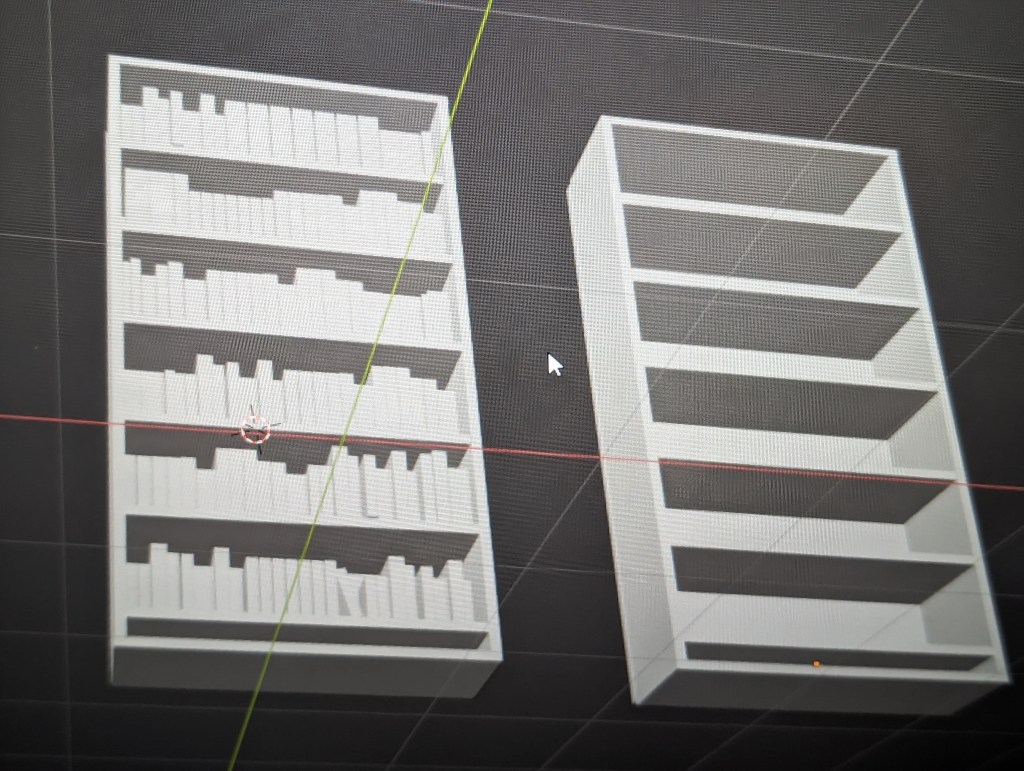
Bookcases made in Blender by me


     A friend of mine was showing me some cool stuff he was doing with Blender and Unreal Engine and it got me motivated  to get into the Blender class I bought on Udemy a while back. I made a bookcase and showed it to some friends. Someone mentioned that I could probably make a bookcase more easily using Unreal Engine. Then I thought to myself, hey, I have made a bookcase on Unreal Engine before and the comment got me wondering if it was really true that Unreal was easier than Blender, at least with respect to bookcases..

     So why am I making bookcases? This is mainly because I am a nerd who loves to collect books. I should say that I used to collect books but unfortunately, I have found it financially prudent to sell them off a couple times in my life. The first time was when Ebay first came out and I was fascinated with the auction process. I sold a bunch of books and all my old Transformer toys from the 80s. Then I bought a car, not a great car but a functional one. Why? Because I really wanted a car, and I was 22 and didn’t have one yet. The books and toys had just been sitting around at my parents house for years anyway. The second time I sold all my books involved downsizing after a career change and in preparation for a move. I was able to replace most of my old yard sale furniture with new stuff. The third time was just after moving into a new house. I had a lot of books at this point, the moving team was quite surprised at the extra workout. The new house needed about 60k in renovations, so I sold all my books except for a few special ones that were signed specifically for me by the authors. Did the books pay for all the renovations? Well no, but they covered most of it.

      So I really love books, however, it became apparent after having a kid and lots of expected and unexpected house guests over the years that rebuilding the book collection in this particular home would not be practical. For this reason one of the early projects I’d like to work on in Unreal Engine is creating a virtual man-cave where I can have all the cool gee-whiz stuff that I can’t afford and don’t have space for in real life. This shall of course include a virtual library.

     The bookcases I have built so far in Blender and Unreal Engine are not anything exciting or fancy. I am at the beginning stages of both and I am basically just joining rectangles together. I had an easier time in Unreal because I did not fill the bookcase with books and it is very easy to drag and drop a wood material onto the bookcase to color it. I still haven’t figured out how to color stuff on Blender, mostly because my class hasn’t gone there yet. However, I didn’t see an easy drag and drop option like UE.

     During the process I learned that materials on Unreal Engine do not always drop on at the right size for some reason. With a little research I found out that I could open the material blueprint and add a texture coordinate node and attach it to the uv part of the material texture sample. Then you can adjust the  u tiling and v tiling to change the relative size of the texture. This technique may be handy for another project I’m thinking about.

     The Blender bookcase was a result of me practicing some of the stuff I had learned in the Udemy class. There was a demo where the instructor used a lot of basic shapes combined with scaling and rotation to create a little scene including a house, some trees and even some blocky cars. I followed along for a little while, but I really wanted to try a bookcase and some books. The bookcase was a simple affair of five rectangles for the main structure and a bunch of duplicated rectangles for the shelves. The books were four rectangles which included the spine, front and back cover and the pages joined together. I used scaling along the various axes to make books of different sizes, joined them and filled the shelves. This took a lot longer than expected as getting the books to all line up correctly and then aligning them on the shelves was tougher than I thought. There is probably an easier way to do it, but I didn’t know how to move the camera so I actually moved the bookshelf around a lot so I could see what I was doing. I also couldn’t figure out how to get the books to just snap to the shelves. What I did get, was a lot of practice with the hotkeys for grabbing and moving along the x,y, and z axis and switching the isometric views with the number pad. I am looking forward to making more bookcases with higher level skills.

My goal is to really leverage what I understand about this software in the next few months. It seems like Blender and UE really are like the peanut butter and jelly of game design. Blender is the cool free software that lets you sculpt, model and animate whatever you want. Then you can take these toys to Unreal Engine’s playground and create game rules and interactions around them.

World building part 2

Photo by Miquel Rosselló Calafell

In this second post on the topic of world building we’ll continue by building upon some of the ideas from the previous post and delving more into the mechanics of the game itself. As I write this, I’m debating if I want to add my own campaign world to this blog. Looking back through my notes and writing I realize that it is pretty disorganized and unbalanced. Maybe I can use my own advice and refine this world into something others might enjoy. I also have a story that is in its initial stages which relates to my campaign world and some of the prominent characters. Looking through the writing it’s obvious that some serious practice is required on my part to get back into the groove. This might be a good opportunity to get into some of that as well and maybe post some of these stories as a web serial. After reading the Wandering Inn I can’t help but be fascinated by the idea of doing nothing but writing a web novel full time in my retirement. For now, let’s jump back into the basics of world building.

Developing factions and organizations is a key strategy for enriching your world with complexity and tension. These entities, each with their own objectives, ideologies, and skills, can significantly enhance the political landscape of any setting. Identify the purpose each faction serves in your world, such as political entities, spiritual bodies, or different guilds—ranging from merchants and thieves to warriors and sorcerers. Consider their ambitions and core essence. Will they assist the players, or will they pose obstacles?

Delve into the backstory for each of your factions. Work their history into the world’s history. Highlight events that shaped the formation of your organization and describe how the repercussions of their past actions affect the players today. Include the past conflicts and political struggles and how it led to their current situation. Who are the notable members of this group? Are they a master crafter, a skilled tactician, or blessed with a silver tongue? Define the hierarchy of the group. How do they gain power or rank? What are the traditions and customs associated with the faction? Can the players become members? If so, how?

A strong faction will usually have influence over a geographical area or at least have a stronghold. Group ties will usually revolve around some sort of resource and compensation. How powerful is your group? How does the resource or area they control affect the economy and the local government? How does their combat power stack up against the local military or police force? There should be powerful stable actions to counter and balance forces that are prone to conquest and chaos. Detail the allies and enemies of the various parties and how they complement or undermine each other. Integrate quests involving the factions into game play and create drama. Players can spend half a game session discussing the ethical ramifications of helping one faction over another. It’s a great bonding experience.

If you are ambitious, have a reputation system that keeps track of the player’s standing in the various organizations. I’ve never really done this with a table top game, but I’ve seen it in a few video games. This reputation can help them gain access to new quest lines, new areas, unique items or even special abilities. If you have an artistic flare, design flags, colors, clothing and architecture that reflects the organization. Create distinction between groups by defining behavior, language differences, codes of honor, and customs.

Now that you are juggling all these factions you need to allow the players to influence them over the course of the story and be ready to accept the inevitable changes that should result. Again remember to keep good documentation for consistency and maintaining balance.

Once you have the basics of your factions outlined, enhance them with a diverse variety of characters. One of the most memorable parts of a gaming session are the interactions between the players and colorful NPCs. The game master should have a solid understanding of the backgrounds, and motivations of the supporting cast. The relationships you build between the supporting characters and players will bring more engagement with the narrative. I like to base my NPCs on people I have met before or an actor on tv, so that I have a picture in my head of what they look like, their mannerisms, clothing, ethnicity and voice. Naturally, I amplify the character, elevating them to a grander scale than what I’m familiar with, to ensure they stand out and entertain. Incorporating numerous details is beneficial, particularly with a vast array of characters, allowing for some similarities while maintaining distinct and unforgettable personas. Assign your NPCs weaknesses and drives, avoiding an excess of clichés. Detail their familial origins, socioeconomic standing, and political beliefs to add depth.

Next, we’ll delve into the mechanics of the game. This section might not resonate with those utilizing pre-existing systems, but for anyone aiming to craft something distinctively their own, there are several considerations to bear in mind. Our desire to infuse our unique touch into the world stems from our creative nature and the joy of gaming collectively. There’s a certain thrill in unleashing our imaginative chaos onto a mundane reality. However, when improvising, it’s important to be wary of potential pitfalls like disrupting the game’s balance or making commitments that are hard to fulfill.

We’ve all been there, in the middle of a cool battle when one of your players comes up with a cool idea with ambiguous rules. You don’t want to slow the flow of the game so you’re like “sure I’ll allow that.” The next thing you know it becomes an exploit that you “allowed before” and the players just bring the ceiling down on the dragon’s head instead of fighting the poor thing. The fact is, we can’t make a rule for everything, but I find that when I am directly involved in creating the mechanics, the numbers and intentions of the rules make more sense and are easier to apply in unique situations.

Developing a set of rules for a tabletop or video game can be a pain, and requires a lot of planning, work and testing. You need a framework to start with that defines what you will allow the players to do. I suggest starting with the basic Hero Quest actions like moving, attacking, and casting spells, then build out from there. Start with an objective for each action and define what the players are trying to achieve. For tabletop games, determine the sequence of actions and what players can accomplish in their turn. For MMOs you need to understand how the real time actions will be structured.

Develop a stat system for attributes that will affect gameplay, for example strength and intelligence. Create a skill system that allows balanced progression and improvement. Define the key resources such as health and mana and how they are used and replenished. Design a combat system with damage calculation, special abilities and defense resolution. Figure out how alternatives to straight combat are resolved when other skills are involved like diplomacy, stealth, and fear. There has to be dice! Decide how the deities of chance affect the gameplay.

The level progression system is the bread and butter of your mechanics. Players need to progress and get stronger in order to defeat tougher foes. Experience can be gained by defeating enemies, completing quests, or overcoming specialized challenges like disarming traps. I have been working on a class-less system for a while and it is rough. Perhaps in the future I will post some of what I have to the blog and ask for some feedback from some more mathematically inclined individuals.

Develop a (virtual) material reward system for overcoming objectives. Yes, I’m talking about that sweet loot. I have many fond memories as a high school nerd flipping to the back of the Dungeon Master’s Guide and rolling on those treasure tables. Gold and magic items, much like experience, should be balanced and earned. Your random number generation mechanism should make it very unlikely to find a plus five vorpal dancing longsword of godly might lying around in a room full of kobolds.

This marks the end of my guide to world-building, at least for the moment. My expertise predominantly resides in crafting stories and plots for tabletop games, with my experience in video game development being somewhat limited. I believe that starting with a well-developed, written world can simplify the process of creating the data structures needed in video game development. As I expand my knowledge, I’ll share more insights. I welcome your comments or suggestions, particularly from those who have experience or know someone who has successfully transitioned their tabletop game into a video game.

World Building Part 1

Photo by Konstantin Fichtner

One of the aspects of game development I have had some experience with through years of tabletop gaming is world-building. As any good dungeon master can tell you, coming up with engaging content is a lot of work, but it’s also very rewarding. It may be easier to take a module or scenario that someone else has written and adapt it to your campaign but it can feel clunky and leave you scrambling to answer the inevitable context related questions your players will come up with. I believe world-building is a crucial skill that is used in creating immersive environments in both tabletop games and video games. One of my goals is to someday take the experience I have from running hundreds of Dungeons and Dragons sessions and building my own world, and apply it while developing an MMO. Let me share with you some of the basics acquired from around the web and my own experiences and introduce the realm of world-building.

The first thing I like to start with is a map. There needs to be a physical world with some geography including mountains, forests, rivers, oceans and cities. The climate and ecosystems for each area should be considered. If it doesn’t make sense from a basic scientific perspective, for example rivers should run downhill from mountains to larger rivers and eventually to lakes and oceans, you will have to know why. If the basics like gravity and common sense are ignored, this can be ok, just be ready to explain the fantasy aspects in detail. Once you have the basics on a piece of paper or some mapping software, like Campaign Cartographer, you can pick a spot to start your adventures.

Before getting into your story, think about the theme and genre.Is this going to be a horror, sci-fi, fantasy or all of the above type of world? Consider the technology level. Are they only a bow and arrow society? Crossbows? Guns? As you write more of the story of your world consider the history and lore and the various societies and factions that affect the scenario. Historical myths and legends that directly affect the cultural evolution of the people of your realm create more engagement from your players. Remember that the players are paying attention to see if any of this is pertinent to how they complete their quests and get their loot, so include details that are interesting and relevant, but not too long winded. Create places of interest like dungeons, castles and ruins. Have unique back stories, cunning creatures and interesting characters (NPCs) related to each one.

Think about the different societies and factions that will affect your story and the relevant gameplay. What are their beliefs, motivations, customs and political structure? In my opinion it is easier to start in a small town and work your way out. You can work to flesh out each faction week to week as the characters are introduced to them instead of doing all the work up front. You may even decide to create certain specific groups and ideals based on the needs of your players or to incite more drama between players and NPCs. Ask yourself the questions a player might ask upon entering your world. Think about the economy of your starting area and the resources that are available. What do people do for a living and what do they eat? What kind of travel is available and who do they trade with? How do the people pay for stuff, standard copper silver and gold, or something more interesting like glowing mana-infused gems? 

Taking your story to a video game requires all of your aspects to be much more fleshed out. Your map will be more detailed, thought needs to go into how characters will navigate through different biomes. You will need to have actual building designs representing particular cultural architecture. All of the narratives and subplots must be complete and ready to go in quest format, pre-written NPC conversations and lorebooks that can be found within the game world. Having a well organized setting from years of tabletop gaming can help you avoid a lot of the pitfalls of an incoherent story and have the added benefit of ready-made quests and player engagement.

Let’s dive more into creating a culture for your world. Start with creating the prominent races and setting up their interactions. Each one should have at least a basic cultural description and history. The culture should organically develop from the setting and backstory and include languages, customs, social norms, religions and political system. Figure out who is in charge, how they got there and who opposes them. Is this a Kingdom with nobility? Maybe the government is controlled by merchants or guilds or there is a council that decides everything with competition for seats. What motivates the populace? How do they earn their income? What is the education level like? Is there a class system where the rich few have the power and peasants toil away for a few coppers a day? Culture also includes things like celebrations, holidays and traditional games or sports. Finally bring out the drama. Who are the political rivals? What neighboring countries are thinking about invading? What monsters lurk in the dark fringes of civilization?

A large part of where culture comes from is a society’s history and lore. A well developed backstory including all of the critical elements will greatly enhance the playability of a game, whether it is a tabletop or a video game. This backstory should provide context and depth to your world by detailing myths, legends, historical events and influential figures like heroes and villains. These items can provide the foundation for current conflicts and plotlines within the game.

Start with how the world was created,for example was it formed by gods, some cosmic event like the big bang, or was it constructed like the Death Star or Ringworld? What are the significant events or time periods in world history? Can it be broken down into ages or eras? Sections of time can be defined by conflict, renaissance, decline, the fall of empires, natural disasters or cataclysms. Maybe a new species invaded the planet from space or emerged from the depths and forever changed the course of civilization. Don’t be afraid to get into the details of the past with major civilizations, describe how they rose to power, or how they may have declined. Explain the major beliefs and traditions and customs and how and why they may have changed over time. Develop the legendary heroes and villains of the ages and why they are remembered and feared. Definitely highlight the major conflicts, including who was allied with or backstabbed by who. 

Myths and legends can define a culture. Make sure the subject of these tales are larger than life and exciting. The adventures of these legendary figures shook the world and became exaggerated over the centuries, immortalized in literature and song. For more depth and mystery continue to develop smaller tales and legends that vary from region to region. Think of the Loch ness monster, bigfoot or the Blair witch. Introduce this lore during gameplay and try to make it relevant to the current story or lead into upcoming stories. Add intrigue by leaving some of the mysteries unexplained. Leave some story arcs open ended for updates and expansions.

Always strive for internal consistency. Make sure your lore with respect to magic or technology is compatible with the existing game mechanics. Ensure historical accuracy within your story. You don’t want to have a treasure trove of full plate armor ten thousand years old when the bronze age was only three thousand years ago. Create a reference document for all of your world’s history, culture, and myths. Try to make common knowledge accessible. In tabletop games you can provide the players with guides for their use. In video games the lore tends to be  more spread out through conversation with NPCs and the reading of lorebooks, but you can certainly have online lore encyclopedias. 

For most fantasy storylines the systems of magic are the defining shape of the gameplay and major motivator of the narrative. Creating a consistent and logical form of magic should be a top priority for any fantasy world developer. Decide where the magic comes from and what form it takes. Is it a natural force? Is it based on faith? Is it internal or external? Also consider if magic should be something everyone can learn or just for an elite few. The magic needs to have limitations like taking time, willpower, mana and or physical resources.

Having dabbled in the development of magic systems I can attest that this is one of the more demanding aspects of world building. There are a huge number of variables to consider before you can even look at balance. How many schools of magic will you allow? Having just elemental magic is relatively easy, but what about necromancy, illusion, healing or summoning? Should the system be customizable or static? Consider how much number crunching you are willing to do in a tabletop game. In a video game timing is everything with casting time, cooldowns and good old resource management. Finally decide how magic will influence the balance of power and overall culture of your world.

If you decide to go with technology or a mix of technology and magic, many of the same considerations apply. You need to define the level of technology, how available it is and how it is used. Is this technology developed or found? What is the effect on the culture? What are the ethical and societal impacts? If you have both then rules will need to be in place for how they react together. Does magic hex technology, or is full on magitech available? Again make sure you have good records for consistency and narrative alignment. No matter which system is used, playtesting will be an integral part of the process to ensure a system that flows and is in balance. 

Define the basics of your economy by establishing currency for all of the different factions. Decide what kind of economy you have, for example is it a feudal gold based system or a modern digital (credit-based) economy. This can get complex very fast so I recommend starting very general and getting more detailed as needed. Identify the key resources of your world, including minerals, metals, food, magic and technology. Decide how scarce your resources are and where each particular one comes from. Have a basic idea of the trade system including routes and import/export dynamics. In an MMO trade will most likely involve an auction house or player to player trades.

Decide how much you want the players to influence the economy. Players can have an effect through quests and missions for different traders and merchants. They can also affect the economy through the gathering of resources and crafting. Integrating the economy through gameplay will promote player engagement, especially in MMOs. Remember to take into account how events like war, natural disasters or even a large festival can affect supply and demand. These scenarios can create easy story hooks to get the players involved, like the standard “stop the bandits from stealing our stuff” story starter hook.

So, I had thought that I could put all of this world building advice into one post, but the more I write, the more stuff I think of. We’ll call this a good first post and I will add more in the future. In the meantime, remember to always run quality assurance and control on your world. Make sure to maintain balance. Magic and the economy can get out of control really fast when players discover all the loopholes you missed or through monumental and unexpected effort they crash your economy or become invincible. The idea is that your game stays fun for everybody.