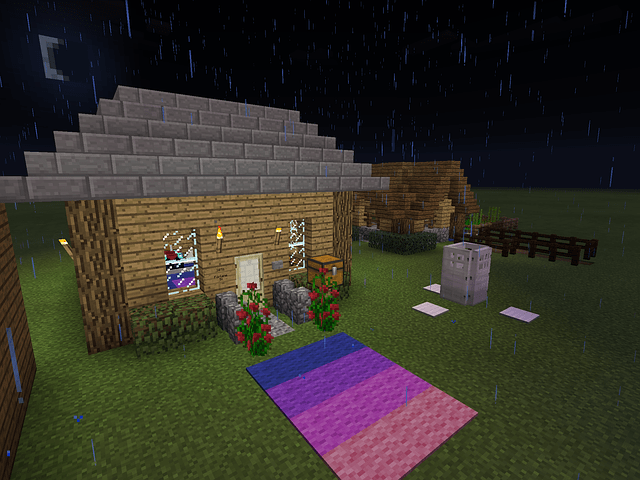
Minecraft, the Addiction is Real

Image by SkyeWeste

Minecraft is the first game my son and I completed together. By completed I mean defeating the ender dragon in survival mode and seeing the credits scroll by. We had been playing for a while, dodging the endermen and waging a sort of primitive trench warfare against the dragon when my son said “Dad, if we just put on pumpkin heads the endermen will ignore us.” We put on our new carved helmets and the rest is history. He was five, and I was so proud as we watched the credits scrolling by, reminding me of the first time I beat Mario Brothers so long ago. Since then my Mom and one of my brothers have also started playing, joined occasionally by my wife. 

If you have gone this far with the game, you appreciate the time and effort involved, and you also probably won’t need to read the rest of this post. If you have not, you may well be missing out on the cross generational, cross dimensional, geologically magical adventure that is Minecraft.

Minecraft, since its official release in 2011, has captivated millions of players worldwide, becoming one of the best-selling video games of all time. Its simplistic graphics and seemingly straightforward gameplay might not initially suggest a recipe for addiction, yet it has a magnetic hold on its audience. So, what is it about Minecraft that makes it so addictive? I’ve tried to explain this to friends and family for years but it’s hard to articulate its nature properly, especially to adult gamers who look at minecraft as ‘just a kid’s game’.

Minecraft’s most compelling feature is its sandbox nature, which allows players to build and explore without predefined objectives. This open-ended creativity is a significant draw. Like life, exploring minecraft is quite like an infinite box of chocolates. In Minecraft, players are limited only by their imagination. Want to build a replica of the Eiffel Tower? Go ahead. Feel like constructing an underwater city? No problem. This freedom to create and modify the game world offers endless possibilities and keeps players coming back for more. 

I’ve had fellow gamers scoff and tell me that I should just play Ark, as if better graphics makes a better game. Although I do love taming armies of dinosaurs, you can’t really dig in Ark, it is not a true sandbox in my opinion. At some point I may need to make a separate blog post on what constitutes an actual sandbox. Some people think a true sandbox is basically a game development engine, but the game should have some set qualities otherwise very few people will invest the time to learn all the tools. Other people seem to think any game with an open world and questionable or non-existent storyline is a sandbox game. Yet none of the better graphics games seem to come close to the scope and versatility that is Minecraft. I would say that 7 Days to Die is the closest thing I’ve seen to an actual sandbox game with decent graphics. Please feel free to comment with your opinions.

Unlike many other games, Minecraft starts you off with a blank canvas. The absence of a rigid storyline allows players to forge their path, setting and achieving personal goals. This creative freedom is akin to playing with digital Lego blocks but on a much grander scale. The satisfaction derived from seeing a project come to life, block by block, is immensely rewarding and addictive. I should mention that Lego Fortnite is coming along nicely but still has a way to go to compete with Minecraft. ‘A’ for effort Epic!

Minecraft offers vast, procedurally generated worlds filled with diverse biomes, hidden treasures, and mysterious caves. The sense of discovery and adventure is a powerful motivator. Every new world is unique, providing fresh landscapes to explore and secrets to uncover. The game’s procedural generation ensures that no two worlds are the same. This randomness fuels  curiosity and encourages players to venture into the unknown. The excitement of what lies beyond the next hill or within a dark cave keeps players engaged and eager to explore further.

The survival mode in Minecraft introduces elements of danger and resource management. Players must gather resources, build shelters, and fend off hostile mobs like zombies and creepers. This survival aspect adds a layer of challenge and urgency that can be thrilling and addictive. Managing resources effectively is critical to survival. Players must mine for materials, hunt for food, and craft tools. The satisfaction of progressing from basic wooden tools to diamond-encrusted armor provides a strong sense of accomplishment and growth. Battling mobs and planning defenses adds a strategic element to the game. The adrenaline rush of surviving a night filled with zombie attacks or successfully navigating a perilous cave system enhances the game’s addictive nature.

Minecraft’s multiplayer mode allows players to join servers, collaborate on massive projects, or compete in mini-games. The social aspect of Minecraft fosters a sense of community and camaraderie.Working with friends or other players on large-scale projects can be incredibly fulfilling. The collaborative effort of building cities, amusement parks, or intricate redstone contraptions strengthens bonds and enhances the gaming experience. Minecraft has a vibrant online community with countless servers catering to different play styles, from creative building servers to competitive PvP (player vs. player) arenas. The ability to join and contribute to these communities adds another layer of engagement and addiction.

Minecraft’s educational potential is another factor contributing to its addictive nature. Many schools and educators use Minecraft as a tool for teaching various subjects, from math and science to history and art.The game encourages problem-solving and critical thinking. Players must figure out how to gather resources, build structures, and survive in a challenging environment. These problem-solving aspects are not only educational but also highly engaging. Minecraft promotes creativity and innovation, essential skills in today’s world. The game’s redstone mechanics, for instance, allow players to create complex machines and circuits, fostering an interest in engineering and technology. My son has a Minecraft world that simulates the periodic table of elements, allowing the combination of protons, neutrons and electrons to create any element, and then further facilitating the building of molecules with those elements.

Mojang, the developers of Minecraft, continually release updates that add new features, biomes, mobs, and mechanics. This constant evolution keeps the game fresh and exciting. The extensive modding community further extends the game’s lifespan. Mods can add new dimensions, gameplay mechanics, and even entirely new games within Minecraft. This endless stream of content ensures that players always have something new to explore and experience.

Despite its challenges, Minecraft can be incredibly relaxing. The simple act of mining, building, and exploring at your own pace can be therapeutic. The game’s repetitive actions, such as mining or farming, can induce a state of mindfulness and focus. Many players find solace in the game’s peaceful moments, where they can escape the stresses of the real world and immerse themselves in their virtual creations. After a stressful day of work it’s hard to beat zoning out with beer in hand just digging for diamonds.

Minecraft fosters a deep sense of personal investment and ownership. The time and effort players put into their creations generate a strong emotional attachment to their worlds and projects. Unlike many other games where progress can be reset or lost, Minecraft worlds can be preserved indefinitely. This sense of permanence adds value to players’ efforts and achievements, making the game more meaningful and addictive. I have a world that I’ve been enhancing over the course of 4 years. I call it my ‘trophy world’ not only because it stays in survival mode so I can earn in-game trophies, but because it is an evolving monument to my own creativity and diligence.

Minecraft’s addictive nature can be attributed to its blend of creativity, exploration, survival challenges, social interaction, educational value, continuous updates, therapeutic qualities, and personal investment. Each of these elements contributes to a deeply engaging and immersive experience that keeps players coming back, time and time again. For me and my family it offers a virtual environment where we can gather and work towards common goals while we catch up and spend quality time together even though we live on opposite sides of the country. Whether you’re a master builder, an intrepid explorer, or a survivalist at heart, Minecraft offers something for everyone, making it one of the most compelling and addictive games ever created.

World building part 2

Photo by Miquel Rosselló Calafell

In this second post on the topic of world building we’ll continue by building upon some of the ideas from the previous post and delving more into the mechanics of the game itself. As I write this, I’m debating if I want to add my own campaign world to this blog. Looking back through my notes and writing I realize that it is pretty disorganized and unbalanced. Maybe I can use my own advice and refine this world into something others might enjoy. I also have a story that is in its initial stages which relates to my campaign world and some of the prominent characters. Looking through the writing it’s obvious that some serious practice is required on my part to get back into the groove. This might be a good opportunity to get into some of that as well and maybe post some of these stories as a web serial. After reading the Wandering Inn I can’t help but be fascinated by the idea of doing nothing but writing a web novel full time in my retirement. For now, let’s jump back into the basics of world building.

Developing factions and organizations is a key strategy for enriching your world with complexity and tension. These entities, each with their own objectives, ideologies, and skills, can significantly enhance the political landscape of any setting. Identify the purpose each faction serves in your world, such as political entities, spiritual bodies, or different guilds—ranging from merchants and thieves to warriors and sorcerers. Consider their ambitions and core essence. Will they assist the players, or will they pose obstacles?

Delve into the backstory for each of your factions. Work their history into the world’s history. Highlight events that shaped the formation of your organization and describe how the repercussions of their past actions affect the players today. Include the past conflicts and political struggles and how it led to their current situation. Who are the notable members of this group? Are they a master crafter, a skilled tactician, or blessed with a silver tongue? Define the hierarchy of the group. How do they gain power or rank? What are the traditions and customs associated with the faction? Can the players become members? If so, how?

A strong faction will usually have influence over a geographical area or at least have a stronghold. Group ties will usually revolve around some sort of resource and compensation. How powerful is your group? How does the resource or area they control affect the economy and the local government? How does their combat power stack up against the local military or police force? There should be powerful stable actions to counter and balance forces that are prone to conquest and chaos. Detail the allies and enemies of the various parties and how they complement or undermine each other. Integrate quests involving the factions into game play and create drama. Players can spend half a game session discussing the ethical ramifications of helping one faction over another. It’s a great bonding experience.

If you are ambitious, have a reputation system that keeps track of the player’s standing in the various organizations. I’ve never really done this with a table top game, but I’ve seen it in a few video games. This reputation can help them gain access to new quest lines, new areas, unique items or even special abilities. If you have an artistic flare, design flags, colors, clothing and architecture that reflects the organization. Create distinction between groups by defining behavior, language differences, codes of honor, and customs.

Now that you are juggling all these factions you need to allow the players to influence them over the course of the story and be ready to accept the inevitable changes that should result. Again remember to keep good documentation for consistency and maintaining balance.

Once you have the basics of your factions outlined, enhance them with a diverse variety of characters. One of the most memorable parts of a gaming session are the interactions between the players and colorful NPCs. The game master should have a solid understanding of the backgrounds, and motivations of the supporting cast. The relationships you build between the supporting characters and players will bring more engagement with the narrative. I like to base my NPCs on people I have met before or an actor on tv, so that I have a picture in my head of what they look like, their mannerisms, clothing, ethnicity and voice. Naturally, I amplify the character, elevating them to a grander scale than what I’m familiar with, to ensure they stand out and entertain. Incorporating numerous details is beneficial, particularly with a vast array of characters, allowing for some similarities while maintaining distinct and unforgettable personas. Assign your NPCs weaknesses and drives, avoiding an excess of clichés. Detail their familial origins, socioeconomic standing, and political beliefs to add depth.

Next, we’ll delve into the mechanics of the game. This section might not resonate with those utilizing pre-existing systems, but for anyone aiming to craft something distinctively their own, there are several considerations to bear in mind. Our desire to infuse our unique touch into the world stems from our creative nature and the joy of gaming collectively. There’s a certain thrill in unleashing our imaginative chaos onto a mundane reality. However, when improvising, it’s important to be wary of potential pitfalls like disrupting the game’s balance or making commitments that are hard to fulfill.

We’ve all been there, in the middle of a cool battle when one of your players comes up with a cool idea with ambiguous rules. You don’t want to slow the flow of the game so you’re like “sure I’ll allow that.” The next thing you know it becomes an exploit that you “allowed before” and the players just bring the ceiling down on the dragon’s head instead of fighting the poor thing. The fact is, we can’t make a rule for everything, but I find that when I am directly involved in creating the mechanics, the numbers and intentions of the rules make more sense and are easier to apply in unique situations.

Developing a set of rules for a tabletop or video game can be a pain, and requires a lot of planning, work and testing. You need a framework to start with that defines what you will allow the players to do. I suggest starting with the basic Hero Quest actions like moving, attacking, and casting spells, then build out from there. Start with an objective for each action and define what the players are trying to achieve. For tabletop games, determine the sequence of actions and what players can accomplish in their turn. For MMOs you need to understand how the real time actions will be structured.

Develop a stat system for attributes that will affect gameplay, for example strength and intelligence. Create a skill system that allows balanced progression and improvement. Define the key resources such as health and mana and how they are used and replenished. Design a combat system with damage calculation, special abilities and defense resolution. Figure out how alternatives to straight combat are resolved when other skills are involved like diplomacy, stealth, and fear. There has to be dice! Decide how the deities of chance affect the gameplay.

The level progression system is the bread and butter of your mechanics. Players need to progress and get stronger in order to defeat tougher foes. Experience can be gained by defeating enemies, completing quests, or overcoming specialized challenges like disarming traps. I have been working on a class-less system for a while and it is rough. Perhaps in the future I will post some of what I have to the blog and ask for some feedback from some more mathematically inclined individuals.

Develop a (virtual) material reward system for overcoming objectives. Yes, I’m talking about that sweet loot. I have many fond memories as a high school nerd flipping to the back of the Dungeon Master’s Guide and rolling on those treasure tables. Gold and magic items, much like experience, should be balanced and earned. Your random number generation mechanism should make it very unlikely to find a plus five vorpal dancing longsword of godly might lying around in a room full of kobolds.

This marks the end of my guide to world-building, at least for the moment. My expertise predominantly resides in crafting stories and plots for tabletop games, with my experience in video game development being somewhat limited. I believe that starting with a well-developed, written world can simplify the process of creating the data structures needed in video game development. As I expand my knowledge, I’ll share more insights. I welcome your comments or suggestions, particularly from those who have experience or know someone who has successfully transitioned their tabletop game into a video game.