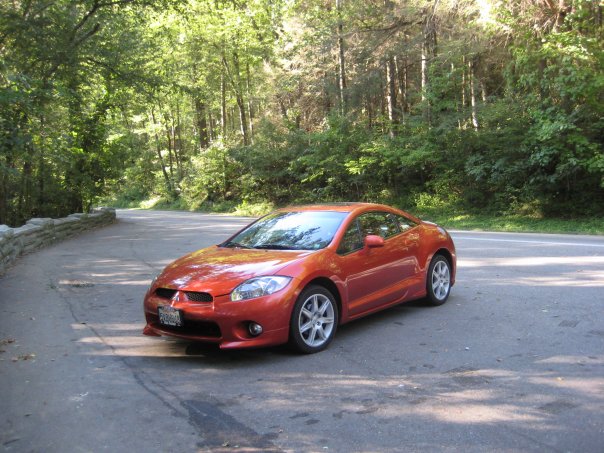
Image by Mike ‘The Eclipse’
I can’t remember if I’ve done one of these before, so here I go (again?). I have owned, rented, and leased a good variety of vehicles over my life, and I have a lot of opinions about them as a result. At different stages of my life, I have purchased for looks, engine size, and practicality. The experience is more than just driving the car; the negotiation, repairs, and drama involved in purchasing and maintaining a vehicle have contributed to some of the most emotional moments of my life. Perhaps my advice can help some of you keep from making the same mistakes.
My first car was a 1988 Buick Skylark I bought for $3,200 at a used car lot in Yuma, Arizona. It was an “old lady beige” color and had a transverse V6 engine. I bought it because one of my friend’s parents had the same car when I was a kid, and it felt nostalgic. It was 1997, and I didn’t know how to haggle or have any credit to speak of, so I took what they gave me and had my first car payment at an outrageous interest rate. I was a Marine who delivered pizza in the evenings, so I drove the hell out of that car. After 100k miles, it broke down a lot. I was in the hobby shop on base almost every other weekend fixing something on it.
It was durable, though. I was T-boned at an intersection in San Diego and was able to drive the three hours back to Yuma after pulling the fender off the wheel, even though the insurance company said it was totaled. The guy who hit me had a little Honda Civic and did not drive away. His insurance company was kind enough to give me $3,700 for the car, which was nice since it was almost paid off and the payout was more than I had paid for the car. In retrospect, it was probably a thank-you for not claiming any injury. I was working nights at Little Caesar’s, and my boss’s husband was a mechanic and auto body repair guy. For $700, he fixed my alignment, replaced the front quarter panel, repaired the cracked bumper, and repainted the car a sparkling cobalt blue. I paid the car off and had over a thousand extra in my pocket. I drove it for another two years before giving it to my future mother-in-law at the time in San Diego. She drove it for another four years before she passed away, and I eventually donated it to a charity I don’t remember.
In my quest to find a car that wouldn’t break down every other week, I decided I would get something brand new. I was a Corporal in the Marines making the big bucks, still in Yuma. After several frustrating encounters with car dealers, I settled on a 1999 Hyundai Accent on sale at the end of the year for $8,900. I found eBay that year and sold off my childhood toy collection, which paid for a good chunk of it. It still seemed expensive to me for what it was, but it was probably the most dependable car I ever owned. I delivered pizza with that car almost thirty hours a week for the next five years. I commuted every weekend from Yuma to San Diego to see my girlfriend for almost a year until I was assigned to MCAS Camp Pendleton. I was able to pack everything I owned into that little car, and it still made it over the mountains. I made a few cross-country trips in it, including going to Maine and back, and then to Iowa and back. We got a flat tire just outside of Spokane, Washington, on the way back, and I think that was the only thing that ever went wrong with it until the transmission broke just after 120,000 miles. When they told me what it would cost to replace the transmission, I gave it away to the mechanic for $300 and had my first midlife crisis.
I was working as a 911 dispatcher, which was only a couple of blocks from my house, so I didn’t really need a car. My wife at the time had just bought a new Dodge Magnum and decided that the money in savings was going toward her Lasik procedure. I tried to be understanding, but underneath I was brooding and angry. There were a variety of other issues going on, but that’s not what this post is about, so moving along. After weeks of walking and biking everywhere, something broke, and I decided I needed and deserved a new car. I was doing the eBay thing at the time because it’s hard to deliver pizza when you’re a dispatcher and don’t have a car. Our spare bedroom in our little two-bedroom condo was full of books, and I decided to liquidate them so I could buy a car. This made my wife happy, but I was in a downward spiral, auctioning off my collection for pennies on the dollar.
Shopping for the car was a hassle since I had to bike everywhere, and no one takes you seriously at a car dealership when you arrive on a bicycle. I never had a good relationship with car salesmen, but my dislike intensified greatly that summer. I finally found an internet sales representative at a Mitsubishi dealer. He let me custom order the Eclipse that I wanted: a sunburst orange, hardtop Spyder with an automatic transmission and ground effects package. It had a 3.8-liter V6 engine, sport-tuned suspension, and wide, high-speed-rated Pilot tires. It had orange leather seats and an awesome sound system with a subwoofer in the back. It took seven weeks to arrive and cost $36k. Worth every penny.
Perhaps not entirely coincidentally, I filed for divorce about six months after buying that car, and what followed were the greatest five years of my life. I visited so many national parks in that car, including Sequoia, Yosemite, Zion, Rocky Mountain, Great Smoky Mountains, and even Acadia. It was fast, comfortable, and relatively reliable. I never delivered pizza in that car, and I washed it every week. When the transmission started slipping at 120k miles, I traded it for a Hyundai Veloster, and it feels like my happiness never recovered.
The Veloster was an adequate vehicle. Hyundai was easy to work with compared to other car dealers, and I was able to complete the trade in about 90 minutes. However, the Veloster was underpowered and underwhelming compared to the Eclipse. This brings up an important point regarding car models and their packages: I rented a low-end Eclipse on a trip to Denver one time, and it was such a piece of crap it made the Veloster seem like a high-end vehicle in comparison. It’s something to keep in mind when you see two of what appear to be the same car with a $20k difference in the price tag. You get what you pay for.
The Veloster had all the bells and whistles, and everything worked well, aside from a couple of annoying features. If the car was wet and you opened the hatchback, the water would run right down into the car. The back seat was so small that someone over 5’10” would need to lean forward so their head didn’t hit the top of the hatchback. The transmission would buck if you slowed down for a stoplight and then tried to accelerate right before the car stopped. It was so bad I took the car in twice thinking something was wrong. The mechanics assured me that it “was just how the car was.” There were no major issues, but I traded it in at 120k miles for a Nissan Maxima because I wanted something with four doors for the kiddo and the car seat.
I have not had the best relationship with Nissan. The deal with the Maxima went fine, but back when I was looking—before I got the Eclipse—I had an issue. I thought my midlife crisis car was going to be a Nissan Z. I remember arriving at the dealer after an all-nighter; I worked 5 PM to 5 AM as a 911 dispatcher. I told them I wanted my payment to be under a certain amount. I had about $10k to put down (I hadn’t quite finished selling off all my eBay stuff yet) and excellent credit. I also knew they could accommodate me if they wanted to because my brother was a Toyota dealer at the time and was trying to get me to buy an ugly-ass Avalon.
The salesman kept me waiting for over 45 minutes—after I had already been there for about an hour browsing and test driving—and came back to me with a payment a hundred dollars a month more than I asked for. I told him it wasn’t going to work and began to walk off. He asked me to stop while he asked his manager if there was anything they could do. I waited around some more. Keep in mind, it was almost noon by now, I hadn’t slept since noon the day before, and I had to go to work in five hours. They came out almost 45 minutes later with an offer that was still 50 dollars more a month than I wanted. I was pissed. As I was walking away, trying not to explode into a physical altercation, they came running back out saying that the head manager could get me the deal I wanted with an even lower interest rate and two dollars a month less than what I was asking for. I would like to say that I politely declined and asked, “Where was that offer two hours ago?” but what I actually said was something more like, “Too late, fuck off and eat a bag of dicks.”
My second bad experience was after the Maxima purchase when I was looking into purchasing a Pathfinder my current wife was leasing from them. I had first looked into trading it for another new Pathfinder lease, but they were telling me they would only give me $16k when the car was worth over $20k. I thought, “Okay, I will just pay the $16k residual and keep it or sell it to someone else for $5k more.” Right from the start, there was resistance. The dealer told me I had to call the finance people, and the finance people told me I had to physically go to the dealer. It took almost a week of phone tag to work out, but they finally settled on me coming into the dealer to do the paperwork. As I was filling out the paperwork, one of the managers came up to the guy I was working with and said, “Oh, there is this new law in effect that says we have to charge you $1,000 for a post-lease inspection,” or some such nonsense. I was already pretty livid with the runaround I had dealt with all week, and this little tweak made me burn. The clerk I was working with looked embarrassed to be adding the extra fee to the paperwork, but I was making phone calls. I found a Nissan dealer 30 miles away that had never heard of this law, so I drove there and purchased the Pathfinder for $16k with no issues. I took the Pathfinder to CarMax where they valued it at $24k, then I went to Jeep, where they paid off my $16k loan and gave me $8k toward a new Jeep Grand Cherokee lease.
I purchased the Midnight Edition Nissan Maxima used with 12k miles for $22k. This was before the Pathfinder incident. The car ran well and had decent power. It was a lot easier to deal with the car seat than with the Veloster. There was an issue where my drivetrain (or something) was leaking before the warranty ran out. I took it to the dealer, and they fixed it with no issues and gave me a loaner while they did the work. However, around 120k miles, I was stranded in a parking lot because the car wouldn’t start. AAA came out, gave me a jump, and said it was just the battery. This was concerning since I knew the battery was only about six months old, but I didn’t worry about it until a week later when the car died again and left me stranded. AAA jumped me again, and I drove it to the place where I bought the battery—a mechanic I’d been using for years—and asked them to take a look at it. They did a full diagnostic and said the battery was dead, but they could find no other issues. They replaced the battery and sent me on my way. I was thinking alternator, everybody was thinking alternator, but the mechanic allegedly could not find anything wrong with it.
A week later, I was stranded again on the I-5 North in the no-man’s-land between Oceanside and San Clemente for three hours in the August heat. I had AAA tow me directly to the mechanic again and asked them to figure it out. The next day they said it was, in fact, the alternator and they could replace it for $1,500. I was already over the Maxima and appalled at the price. The place was under new management, and I should have made more noise, but I didn’t want the hassle of towing it all over town for another quote, and I couldn’t get a good trade-in for a car that wasn’t running. I paid the price and traded it in for a new Subaru Crosstrek a week later. I do not use that mechanic anymore.
The Subaru deal was the easiest car purchase I ever made. I bought a Sun Blaze Pearl (orange) Wilderness Edition thinking I was gonna be all outdoorsy. I came in with a CarMax valuation of my Maxima and told them I wanted a 3-year loan with less than 3 percent interest, $3,500 off the sticker price, and a trade-in price for the Maxima that was at least what CarMax offered. They came back with everything I asked for less than five minutes later. I know, I should have asked for more. They then sat me down with some kind of insurance salesperson who tried to sell me extra protection and features for everything. She seemed offended when I turned everything down. If I accepted even half of what she offered, it would have doubled my car payment! “What will you do,” she asked, “if you get a crack in your windshield and you have to pay $1,900 to replace it because of the sensitive cameras installed?” She didn’t really like my response, which was: “If my windshield is cracked so badly that I can’t see out the window and it can’t be patched, I will trade the car in for something else that does not have a useless camera in the window.” It turns out that this $1,900 camera does not even record video; it’s just a fancy motion sensor. After I politely told her I would not be purchasing any of the extra insurance policies and started openly questioning if I should purchase such a delicate vehicle, she finally let me go.
I should not have bought the Subaru. It is a perfectly adequate car in most ways, and I mostly got it because of the 5-star crash rating for my kiddo, thinking we would do some real backcountry camping trips. It turns out my son is not quite that adventurous. The car is heavy, and even though it is a four-cylinder, it gets worse gas mileage than my Maxima or Eclipse. My wife’s 4×4 Jeep Grand Cherokee gets better gas mileage. You cannot permanently disable the function that makes your car turn off at every light; you have to remember to push the button to turn it off every time you start the car. If you forget and end up in stop-and-go traffic—which is every day for me—the car will buck and kick because it can’t decide if it should shut off or not.
Furthermore, you can’t disable all of the collision and lane change alarms. Sometimes I like to open up and do the I-5 road slalom. There are so many alarms and bells going off it sounds like a McDonald’s kitchen at lunchtime. When I go up the hill close to my house, the “out of lane” alarm goes off every time even though I’m in the only lane available. I’ve had the collision alarm go off a few times when going to pass or change lanes, and it scared the crap out of me because I didn’t see anything, and it turns out nothing was there. When you go around corners and there are trees in the median, the front collision alarm goes off. If something heavy, or your dog, is in the passenger seat, the seat belt alarm goes off continuously until you buckle it.
Finally, when you use the proximity unlock on the driver’s door, it only unlocks the driver’s door. If you use it on the passenger door, it unlocks everything. This is an issue because at night when I open the driver’s door and try to unlock the other doors for passengers, there is no light on the door panel to show which button to push, so I have to get out my phone flashlight to look. As soon as you start the car, however, the door panel lights up so you can see the buttons. I have asked Subaru about this during every oil change, and they do not have a solution. My work around is to just unlock the car from the passenger side at night. It’s embarrassing.
I suppose I should touch on some cars that I’ve had tertiary experience with since they were technically purchased or leased in my name. My ex-wife’s first car was a 1997 Geo Metro. I think we bought it used for peanuts. It was dependable and got good gas mileage, and that’s about the best I can say for it. It was underpowered and tiny. You couldn’t drive too fast because of the fear for your life. It was kind of like being on a large skateboard. We gave it to my brother in 2006 when we got the Dodge Magnum. My brother drove it for years, even after it lost one of the cylinders and most of the normal electronics—including the hatchback and passenger door—stopped working. He sold it for $300 when he moved back to Maine in 2009. I remember seeing it a few years later being driven by someone else. I could tell it was the same car because of the huge scratch in the driver-side door where my wife had hit a pole in the ground. All of the paint was faded, so the car was more gray than black, but it was still running.
The Dodge Magnum was a nice-looking car with the oversized rims we had. It did not feel underpowered even though we only had the V6, and the turn radius was surprisingly good for its size. The rear visibility was terrible and caused at least one minor collision when my wife was backing out of a parking spot. Overall, it was a glorified, overpriced station wagon.
My current wife had a Mercury Mariner and a Nissan Pathfinder, neither of which I drove very much. I liked the Pathfinder more because it was newer and not falling apart like the Mercury. My current wife’s last two cars have been 4×4 Jeep Grand Cherokees. They were three-year leases. The first one barely saw 12,000 miles and left us stranded in the desert on the way to Las Vegas. It was no-shit 118 degrees out, and we were there for almost three hours with no water. Apparently, the fuel pump went out. Jeep roadside assistance was non-existent. After I finally figured out the website, they just sent me a text asking me to pay $647 before they sent someone out to the wrong location. I declined. Good thing I have AAA. The Jeep dealer in Las Vegas, where it was towed, did not offer apologies or a courtesy vehicle. Apparently, Jeep does not do courtesy vehicles. So we had to Uber all over Las Vegas all week while they fixed the truck. I would like to mention at this point that my experience with Hyundai and Mitsubishi roadside assistance was amazing, even better than AAA. This was twenty-plus years ago, though, and I know things change.
Our second Grand Cherokee is basically the same vehicle but newer. I would never have done Jeep again, but the wife insisted, and it was easy. I came in with a CarMax offer, and Jeep accepted it and gave me a decent lease without much haggling. Our second Jeep barely reached 3,000 miles when it left us stranded in the driveway. The battery was dead. I tried to jump it myself, but for some reason, it wouldn’t start even after charging for 40 minutes. I called AAA to take a look. They jumped it and it started—for about 90 seconds—and then it died. It would not start again. AAA said it looked like the car still thought it was “on,” so it just stayed frozen. No power meant we couldn’t put the car in neutral or release the e-brake. AAA had to drag it out of the driveway and spend 30 minutes getting it onto the ramp truck. Again, Jeep was not apologetic and said they did not have loaner vehicles. They replaced both batteries and told us to come pick it up. I can’t believe people take these pieces of junk off-roading into the middle of nowhere. We’ve barely had the vehicle a year; I can’t wait to see what adventures the next couple of years hold.
I know you’re probably thinking: “He talks about CarMax having reliable estimates for car values; why doesn’t he buy from there?” To put it simply, CarMax has a crappy selection of higher-mileage, ugly cars. I have walked around the lots for hours and scanned online. The cars are always slightly too old, the wrong version, or the wrong color. If CarMax could custom order me a new version of what I wanted, I would probably buy from them because otherwise, they seem pretty solid, and the experience there is so much better than a car dealership.This is my sage advice to anyone purchasing a vehicle in the modern age: Don’t. Get a job within walking distance of the neighborhood you love to live in, or work from home. If that is not feasible, then order online if you can, even if it costs a bit extra. Car dealerships and dealers are, by and large, terrible people and places. Avoid them for the sake of your sanity. Buy new if you can, unless you like fixing cars or know a friendly mechanic. Used cars come with unknown baggage. Ride a bike and save up. Get your maintenance done in a timely manner. If your engine seizes because you haven’t changed the oil in 30,000 miles, or you have a blowout on the highway because your tires are bald as shit, you have no one to blame but yourself. Get AAA; even new cars break. Get something you like that speaks to who you are. Driving around the “practical” car gets old fast. Don’t buy a Jeep, or any Chrysler product for that matter, if you can help it. Good luck.

 The Upgrade Blog